
Understanding Pelvic Floor Dysfunction
Pelvic floor dysfunction therapy can change lives for those suffering from a range of uncomfortable and sometimes debilitating symptoms. Here are the key points to know upfront:
- Symptoms: Urinary incontinence, pelvic pain, pelvic pressure, sexual problems, bowel control issues.
- Causes: Aging, pregnancy, chronic constipation, pelvic surgery, obesity.
- Treatments: Physical therapy, biofeedback, exercises, medications.
Pelvic floor dysfunction happens when the muscles in the pelvic floor can’t properly coordinate to help control bowel and bladder movements. This can lead to a mix of symptoms, including urinary incontinence, chronic pelvic pain, and even sexual difficulties. Many people think they just have to live with these symptoms, but there are effective treatments available, one of the most successful being physical therapy tailored for the pelvic floor.
Hi, I’m Bryan Wright. With years of experience in physical therapy, I specialize in pelvic floor dysfunction therapy and aim to demystify treatment options, empowering patients to regain control over their symptoms.
What is Pelvic Floor Dysfunction?
Pelvic floor dysfunction happens when you can’t properly relax and coordinate the muscles in your pelvic floor. These muscles support the bladder, uterus (or prostate), and rectum. They play a big role in controlling your bladder and bowel movements.
Think of your pelvic floor muscles as a hammock. They stretch from your pubic bone in the front to your tailbone in the back. When these muscles are strong and working well, they keep everything in place and help you pee and poop without issues.
Pelvic Floor Muscles
The pelvic floor muscles are like any other muscles in your body. They need to tighten and relax at the right times. If they stay tight, you might have trouble peeing, pooping, or even experiencing pain during sex.

Urinary Tract
Your urinary tract includes your bladder and the tubes that carry urine out of your body. When your pelvic floor muscles aren’t working right, you might find yourself running to the bathroom more often or even leaking urine.
Reproductive Tract
For women, the pelvic floor supports the uterus and plays a role during childbirth. For men, these muscles help with erections. Weak or tight pelvic floor muscles can lead to problems like erectile dysfunction or pain during sex.
Bladder Control
Good bladder control means you can hold urine until you reach a bathroom. Pelvic floor dysfunction can make this difficult. You might feel a constant urge to pee or leak urine when you laugh or sneeze.
Bowel Control
Your pelvic floor muscles also help you control your bowel movements. Weak or dysfunctional muscles can make it hard to poop, leading to constipation or even fecal incontinence.
Understanding these basics can help you recognize the importance of your pelvic floor and why seek treatment if you’re experiencing symptoms.
Next, let’s dive into the different techniques used in pelvic floor dysfunction therapy.
Causes and Symptoms of Pelvic Floor Dysfunction
Pelvic floor dysfunction can be caused by several factors and presents with various symptoms. Here’s a closer look at some common causes and their associated symptoms:
Causes
Pelvic Surgery: Surgeries like prostate removal in men or hysterectomy in women can weaken or damage the pelvic floor muscles. This can lead to dysfunction, making it difficult to control your bladder or bowels.
Aging: As you get older, your muscles naturally weaken, including those in the pelvic floor. This can cause issues like frequent urination or bowel control problems.
Pregnancy: Carrying a baby puts extra pressure on the pelvic floor muscles. Childbirth can stretch or tear these muscles, leading to dysfunction.
Overweight: Extra weight adds stress to your pelvic floor muscles. This can weaken them over time and cause symptoms like urine leakage or difficulty with bowel movements.
Pelvic Injuries: Traumas like falls or accidents can damage the pelvic floor muscles, leading to pain and dysfunction.
Symptoms
Constipation: Difficulty in relaxing your pelvic floor muscles can make it hard to poop. This can lead to straining and discomfort.
Frequent Urination: Feeling the need to pee often, even if your bladder isn’t full, is a common symptom. This can be particularly disruptive to daily life.
Bowel Control Issues: Weak pelvic floor muscles can make it hard to control your bowel movements, leading to constipation or fecal incontinence.
Pain During Sex: For those assigned female at birth, tight or dysfunctional pelvic floor muscles can cause pain during intercourse.
Erectile Dysfunction: For those assigned male at birth, weakened pelvic floor muscles can make it difficult to get or maintain an erection.
Recognizing these causes and symptoms can help you understand the importance of seeking treatment.
Next, let’s explore the techniques used in pelvic floor dysfunction therapy.
Pelvic Floor Dysfunction Therapy
Techniques Used in Pelvic Floor Dysfunction Therapy
Pelvic floor dysfunction therapy involves several techniques designed to improve muscle function, relieve pain, and enhance overall quality of life. Here are some key techniques used:
Pelvic Floor Physical Therapy
Pelvic floor physical therapy focuses on strengthening and relaxing the pelvic floor muscles. It involves personalized exercises and treatments that target the specific needs of each patient.
Exercises
-
Kegels: These are popular exercises that involve contracting and relaxing the pelvic floor muscles. They help strengthen the muscles and can relieve pain during sex and control incontinence. Your physical therapist (PT) will guide you on how to perform Kegels correctly for maximum benefit.
-
Core Strengthening: Core exercises, including Pilates, help support the pelvic floor muscles by enhancing overall core stability. This can reduce strain and improve muscle function.
Pain Relief and Muscle Relaxation
-
Trigger Point Therapy: This technique applies pressure to specific points on the body, known as trigger points, to relieve muscle tension and pain. It can be performed internally or externally.
-
Myofascial Release: This manual therapy technique involves applying gentle pressure to the connective tissues to release tension and improve mobility. It can be particularly effective for relieving pelvic pain.
-
Functional Dry Needling: This involves inserting thin needles into trigger points to release muscle tension and improve function. It is similar to acupuncture but focuses on muscle pain and movement issues.
Electrical Stimulation and Biofeedback
-
Electrical Stimulation: This technique uses electrical currents to reduce pelvic pain and muscle spasms. Your PT may perform this in the office or teach you how to do it at home with special equipment.
-
Biofeedback: Biofeedback uses devices to monitor the contraction and relaxation of your pelvic floor muscles. Electrodes or internal probes measure muscle activity, and the results are displayed on a screen. This helps you and your PT track progress and adjust exercises as needed.
Manual Therapy
Manual therapy includes hands-on techniques that your PT uses to manipulate the muscles and tissues. This can help relieve pain, improve mobility, and enhance muscle function.
-
Soft Tissue Work: This involves massaging the pelvic floor muscles and surrounding areas to release tension and improve blood flow.
-
Scar Tissue Massage: If you’ve had surgery, such as a C-section, scar tissue massage can help reduce discomfort and improve tissue flexibility.
By combining these techniques, pelvic floor dysfunction therapy can address a wide range of symptoms and improve your overall well-being.
Next, let’s explore the benefits of pelvic floor dysfunction therapy.
Benefits of Pelvic Floor Dysfunction Therapy
Pelvic floor dysfunction therapy offers numerous benefits that can significantly improve your quality of life. Here are some key advantages:
Improved Bladder Control
One of the most immediate benefits is better bladder control. Many people with pelvic floor dysfunction struggle with urinary incontinence or frequent urination. Pelvic floor exercises, such as Kegels, can strengthen the muscles that control your bladder, reducing leaks and urgency.
Reduced Pain
Pelvic floor dysfunction often comes with chronic pain, especially during activities like sitting or sexual intercourse. Techniques like trigger point therapy and myofascial release help to release muscle tension and alleviate pain. A case study from the Cleveland Clinic highlighted a woman who experienced significant pain relief after just a few sessions of pelvic floor physical therapy.
Enhanced Sexual Function
For both men and women, pelvic floor dysfunction can lead to sexual problems. Women may experience pain during intercourse, while men might struggle with erectile dysfunction. Strengthening and relaxing the pelvic floor muscles can improve these conditions. According to a review in Sex Med Rev, pelvic floor physical therapy has shown to improve sexual function in both genders.
Better Bowel Control
Pelvic floor dysfunction can also affect bowel control, leading to constipation or fecal incontinence. Biofeedback and specific exercises can help you learn to better control these muscles, making bowel movements more regular and reducing accidents. A study published in the Journal of Clinical Medicine found that pelvic floor muscle training significantly improved bowel function in people with multiple sclerosis.
Improved Quality of Life
All these benefits add up to a better quality of life. With improved bladder and bowel control, reduced pain, and enhanced sexual function, you can return to daily activities with more confidence and comfort. A survey in the International Journal of MS Care found that addressing pelvic floor dysfunction symptoms led to significant improvements in overall well-being for individuals with multiple sclerosis.
Pelvic floor dysfunction therapy is a holistic approach that addresses multiple symptoms, leading to a more balanced and fulfilling life. Next, we’ll look at what you can expect during pelvic floor therapy sessions.
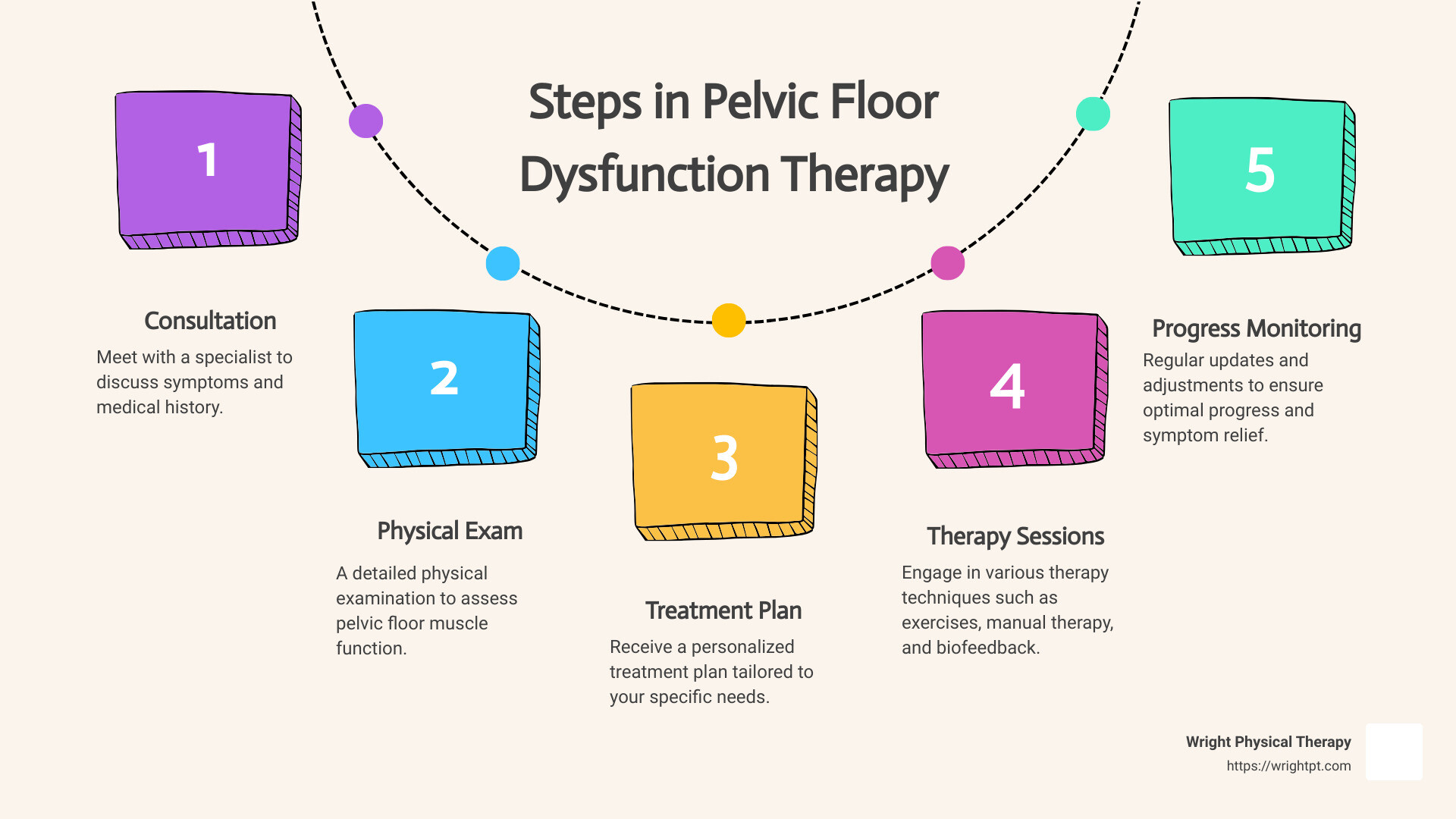
What to Expect During Pelvic Floor Therapy Sessions
When you start pelvic floor dysfunction therapy, it’s normal to have questions about what will happen. Let’s break it down.
Initial Consultation
Your first visit begins with an initial consultation. Your therapist will ask about your symptoms, medical history, and goals. This helps them understand your unique situation.
Physical Exam
Next, you’ll undergo a physical exam. This might include checking your core muscles’ strength and endurance. The therapist will also assess how well your pelvic floor muscles coordinate during specific activities.
Personalized Treatment Plan
Based on the consultation and exam, your therapist will create a personalized treatment plan. This plan includes exercises and techniques tailored to your needs. Your plan is designed to help your pelvic muscles relax and get stronger.
Internal and External Therapy
Your treatment might involve both internal and external therapy. Internal therapy can be uncomfortable for some, so your therapist will only start this when you’re ready. External therapy might include exercises and manual techniques to relax and strengthen your muscles.
Session Customization
Each session is customized to your progress and comfort level. Your therapist will adjust your exercises and techniques as you improve. They might also use tools like biofeedback or electrical stimulation to help you gain better control over your pelvic muscles.
Overall, pelvic floor dysfunction therapy is a step-by-step process aimed at relieving your symptoms and improving your quality of life. In the next section, we’ll answer some frequently asked questions about pelvic floor dysfunction therapy.
Frequently Asked Questions about Pelvic Floor Dysfunction Therapy
How do you fix pelvic floor dysfunction?
Fixing pelvic floor dysfunction often starts with pelvic floor physical therapy. This therapy includes exercises and techniques specifically designed to strengthen and relax the pelvic muscles.
Biofeedback is another useful tool. It helps you gain awareness and control over your pelvic muscles using electronic devices. According to research, biofeedback can significantly improve muscle function and reduce symptoms.
What is the most effective treatment for the pelvic floor?
The most effective treatment for pelvic floor dysfunction is usually a combination of pelvic floor physical therapy and muscle training. Studies have shown that this approach can improve or even cure symptoms like urinary incontinence and pelvic pain.
Exercises such as Kegels are often recommended, but they need to be done correctly. A pelvic floor physical therapist can guide you to ensure you’re performing these exercises properly.
What do they do during pelvic floor therapy?
During pelvic floor therapy sessions, you can expect a variety of treatments tailored to your needs:
- Exercises: These are designed to strengthen or relax your pelvic muscles.
- Stretches: Helps in improving flexibility and relieving tension.
- Manual therapy: The therapist may use hands-on techniques to manipulate and relax the muscles.
- Biofeedback: Uses electronic devices to help you understand and control your muscle movements.
- Electrical stimulation: Small electrical currents are used to stimulate and strengthen the pelvic muscles.
Each session is customized to address your specific symptoms and progress, ensuring that you receive the most effective treatment for your condition.
Pelvic floor dysfunction therapy is a comprehensive approach to improving your pelvic health and overall quality of life.
Conclusion
Taking care of your pelvic floor health is crucial for your overall well-being. Pelvic floor dysfunction can significantly impact your daily life, causing issues like bladder control problems, bowel control issues, and even pain during sex. But you don’t have to live with these symptoms. Seeking professional help is the first step towards relief.
At Wright Physical Therapy, we specialize in pelvic floor dysfunction therapy. Our team is dedicated to providing personalized care tailored to your specific needs. We understand that every patient’s condition is unique, and we create individualized treatment plans to ensure the best outcomes.
We believe in the power of patient education. Understanding your condition and the treatments available empowers you to take an active role in your recovery. Our therapists will guide you through every step of the process, from your initial consultation to your personalized therapy sessions.
Our impact extends beyond individual treatments. We are committed to making a positive community impact by raising awareness about pelvic floor health. We aim to break the stigma surrounding pelvic issues, encouraging open conversations and timely interventions.
Don’t let pelvic floor dysfunction control your life. Take the first step towards better health by contacting Wright Physical Therapy. Our team is here to support you on your journey to improved pelvic health and a higher quality of life.
Learn more about our pelvic floor therapy services
By combining professional treatments with proactive self-care, you can take control of your pelvic floor therapy and improve your overall well-being. You deserve to live a life free from the discomfort and limitations that pelvic floor dysfunction can bring.