
Introduction
At home pelvic floor therapy is a powerful and convenient way to address pelvic floor issues without needing to visit a clinic. By practicing specific exercises and techniques in the comfort of your own home, you can effectively strengthen your pelvic floor muscles, which play a crucial role in bladder, bowel, and sexual function.
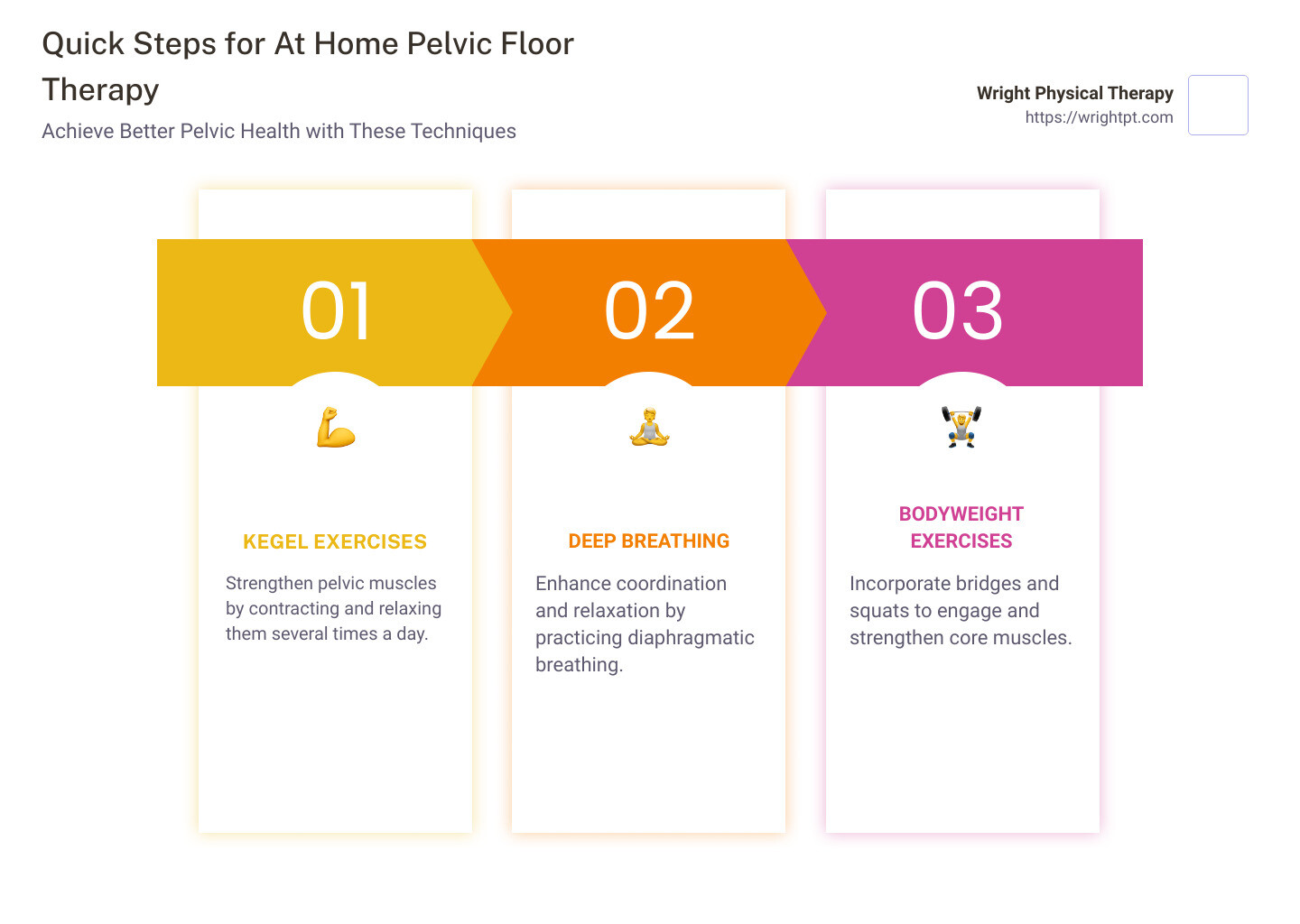
If you’re dealing with conditions like urinary incontinence, postpartum recovery, or pelvic organ prolapse, here are some quick steps to get started with at home pelvic floor therapy:
- Practice Kegel exercises regularly to strengthen pelvic muscles.
- Incorporate deep breathing exercises to enhance coordination.
- Use bodyweight exercises such as bridges and squats.
- Maintain good fluid management by limiting caffeine and alcohol.
Hi, I’m Bryan Wright, a physical therapist specializing in pelvic floor therapy. I focus on helping people live pain-free and improve their quality of life through targeted exercises and innovative solutions. Let’s dive into at home pelvic floor therapy and explore practical techniques and tips for optimal health.
Understanding Pelvic Floor Therapy
Pelvic floor therapy involves exercises and techniques designed to strengthen the muscles that support your bladder, uterus, and rectum. These muscles are crucial for maintaining urinary and fecal continence, as well as aiding in postpartum recovery.
Pelvic Floor Muscles
The pelvic floor is a hammock of muscles that stretches across the pelvis. These muscles support your internal organs and help control your bladder and bowel movements. Weakness in these muscles can lead to various issues, including incontinence and pelvic organ prolapse.
Fact: According to Dr. Rotimi Nettey, a urologist at Baylor College of Medicine, “Pelvic floor therapy works the muscles in the pelvic floor to rehabilitate those muscles from injury or destruction.”
Urinary Incontinence
Urinary incontinence is the involuntary leakage of urine. It can be triggered by activities like coughing, sneezing, or exercise. This condition is common in both men and women, especially after childbirth or prostate surgery.
Quote: “Many times, small degrees of stress or urge will resolve over time,” says Dr. Jill Rabin, OB-GYN and urogynecologist. But if symptoms persist, pelvic floor exercises can be a game-changer.
Fecal Incontinence
Fecal incontinence involves the involuntary loss of stool. This condition can be distressing and significantly impact your quality of life. Strengthening your pelvic floor muscles can help manage and reduce these symptoms.
Postpartum Recovery
Pregnancy and childbirth can weaken the pelvic floor muscles, leading to issues like urinary incontinence and pelvic organ prolapse. Pelvic floor exercises are crucial for postpartum recovery, helping new mothers regain muscle strength and improve overall pelvic health.
Case Study: After giving birth, many women experience changes in their bodies, particularly in the pelvic floor area. According to experts at Wright Physical Therapy, targeted exercises like Kegels and bridges can significantly improve muscle strength and coordination.

Understanding the importance of a strong pelvic floor is vital for everyone, but especially for those recovering from childbirth or surgery. By incorporating at home pelvic floor therapy into your routine, you can improve muscle strength, reduce incontinence, and enhance your overall quality of life.
Next, let’s explore specific techniques for at home pelvic floor therapy, including diaphragmatic breathing, Kegel exercises, and more.
Techniques for At Home Pelvic Floor Therapy
Diaphragmatic Breathing
Diaphragmatic breathing is a simple yet powerful technique for pelvic floor therapy. It helps with stress management, relaxation, and core stability.
To practice:
- Lie on your back with your hands on your abdomen.
- Inhale deeply through your nose, letting your abdomen rise.
- Exhale slowly, pulling your abdominal muscles inward.
- Practice in different positions, like sitting or standing.
This exercise helps your pelvic floor muscles work efficiently and encourages relaxation.
Kegel Exercises
Kegel exercises are essential for urinary control and muscle contraction. They are most effective when performed pain-free.
To perform Kegels:
- Find a comfortable position, either lying on your back, sitting, or standing.
- Contract the muscles you use to stop the flow of urine.
- Hold the contraction for 3-5 seconds, then relax for 3-5 seconds.
- Repeat this cycle ten times.
Gradually increase the duration of contractions to 10 seconds and aim for 30-40 repetitions throughout the day.
Toe Taps
Toe taps are great for core engagement and pelvic muscle activation.
To do toe taps:
- Lie on your back with knees bent and feet on the floor.
- Lift both legs to a tabletop position.
- Lower one leg gently, tapping your toe on the floor, then return to the tabletop position.
- Repeat with the other leg, alternating for 12-20 repetitions.
Bridge Pose
The bridge pose is a popular yoga exercise that strengthens the pelvic floor and engages the core.
Steps for bridge pose:
- Lie on your back with knees bent and feet hip-width apart.
- Lift your hips towards the ceiling, keeping feet and shoulders on the floor.
- Hold for 5-10 breaths, then lower your hips back down.
- Repeat 2-3 times.
Bird Dogs
Bird dogs improve balance, posture, and engage the pelvic floor muscles.
To perform bird dogs:
- Start on all fours with wrists under shoulders and knees under hips.
- Extend your right arm forward and left leg backward, keeping both in line with your body.
- Hold for a few seconds, then return to the starting position.
- Repeat with the left arm and right leg, alternating sides for 10-15 repetitions.
By incorporating these techniques into your daily routine, you can strengthen your pelvic floor muscles and improve your overall well-being. Next, we’ll discuss self-help measures for maintaining pelvic floor health.
Self-Help Measures for Pelvic Floor Health
Strengthen Your Core
Strengthening your core is essential for maintaining a healthy pelvic floor. Kegel exercises are well-known for this purpose, but don’t forget about other activities like Pilates and yoga. These exercises not only target your pelvic floor muscles but also improve overall core stability.
For example, the bridge pose in yoga helps engage and strengthen your pelvic floor. Lie on your back with knees bent and feet flat on the floor. Lift your hips toward the ceiling, hold for a few breaths, and then lower back down. Repeat this 2-3 times.
Practice Fluid Management
Managing your fluid intake can significantly impact your pelvic floor health. Limit caffeine and alcohol as they can irritate your bladder and increase urine output. Instead, focus on staying hydrated with water.
Your bladder can be trained. Avoid going to the bathroom out of habit. Aim to void only 4-6 times during the day. This can help retrain your bladder and reduce unnecessary trips to the restroom.
Maintain a Healthy Body Weight
Carrying excess weight puts additional pressure on your pelvic area. Maintaining a healthy weight can alleviate symptoms of pelvic floor disorders. A high-fiber diet can help keep your digestive system running smoothly and prevent constipation, which can further strain your pelvic floor.
Avoid processed foods and opt for whole grains, fruits, and vegetables. Not only will this help with your weight, but it will also keep your colon happy and functioning well.
Avoid Smoking
Smoking can lead to chronic coughing, which puts stress on your pelvic floor muscles. Reducing or quitting smoking can help decrease your chances of urinary incontinence. Less coughing means less pressure on your pelvic floor.
Ignore Your Bladder
It might sound strange, but you can retrain your bladder by not voiding out of habit. Our bladders are conditioned by our behaviors. If you find yourself rushing to the bathroom as soon as you get home, try to hold off. Bladder conditioning can help you regain control and reduce the frequency of urination.
By incorporating these self-help measures into your daily routine, you can support your pelvic floor health and improve your overall quality of life. Next, we’ll address some frequently asked questions about at-home pelvic floor therapy.
Frequently Asked Questions about At Home Pelvic Floor Therapy
Can you do your own pelvic floor therapy?
Yes, you can do your own pelvic floor therapy at home. Start with diaphragmatic breathing to manage stress and improve core stability. Lie flat on your back or sit comfortably. Place one hand on your chest and the other on your stomach. Breathe deeply through your nose, letting your stomach rise while keeping your chest still. Exhale slowly through your mouth. Repeat several times.
Another effective exercise is the crawling position. Get on your hands and knees. Arch your back up like a cat, then dip it down like a cow. This helps stretch and relax the pelvic floor muscles.
Can I fix my pelvic floor at home?
Yes, many people can improve their pelvic floor health at home. Core strengthening exercises like Kegel exercises are essential. To do Kegels, tighten your pelvic floor muscles as if you’re stopping urine flow. Hold for a few seconds, then relax. Aim for 10 repetitions, three times a day.
Fluid management is also crucial. Limit caffeine and alcohol, which can irritate the bladder. Drink plenty of water and avoid sugary drinks.
Maintaining a healthy weight reduces pressure on your pelvic floor. Eat a high-fiber diet to avoid constipation and reduce processed foods.
What’s the fastest way to tighten pelvic floor muscles?
The fastest way to tighten your pelvic floor muscles is through consistent Kegel exercises. These exercises involve muscle contraction and relaxation. Start by identifying your pelvic floor muscles—try stopping your urine flow midstream. Once you know the muscles, practice contracting them for a few seconds, then relaxing. Do this several times a day.
Incorporate Kegels into other activities. For example, engage your pelvic floor muscles when lifting objects or during a bridge pose. This multitasking helps strengthen the muscles faster.
For more tips and personalized guidance, consult a pelvic floor therapist. They can ensure you’re doing the exercises correctly and effectively.
Next, we’ll wrap up with some final thoughts and additional resources for your pelvic floor health journey.
Conclusion
At Wright Physical Therapy, we are dedicated to helping you achieve optimal pelvic floor health through personalized care and community impact.
Our team of experts is committed to providing individualized treatment plans. We understand that each person’s journey is unique. That’s why we tailor our approach to meet your specific needs, ensuring you receive the most effective therapy possible.
Community Impact
We believe in giving back to the communities we serve. Our involvement goes beyond the clinic walls. We actively participate in local events and support charitable initiatives. Each referral we receive contributes to our broader social mission, as we donate a portion of our revenue to organizations dedicated to protecting and empowering children.
Patient Education
Empowerment through education is at the heart of our practice. We ensure that every patient understands their treatment plan and the reasons behind each specific therapy or exercise. This knowledge not only helps in alleviating symptoms but also equips you with the tools to manage your health and prevent future issues.
For more information on our services and how we can support your pelvic floor health journey, visit our Pelvic Floor Therapy page.
Together, let’s move towards a healthier future.