
Navigating Recovery: Exercises to Avoid After Knee Replacement
Understanding which exercises to steer clear of after a knee replacement can significantly impact your recovery journey. Jumping back into physical activities can be tempting, but know knee replacement exercises to avoid to ensure a smooth healing process.
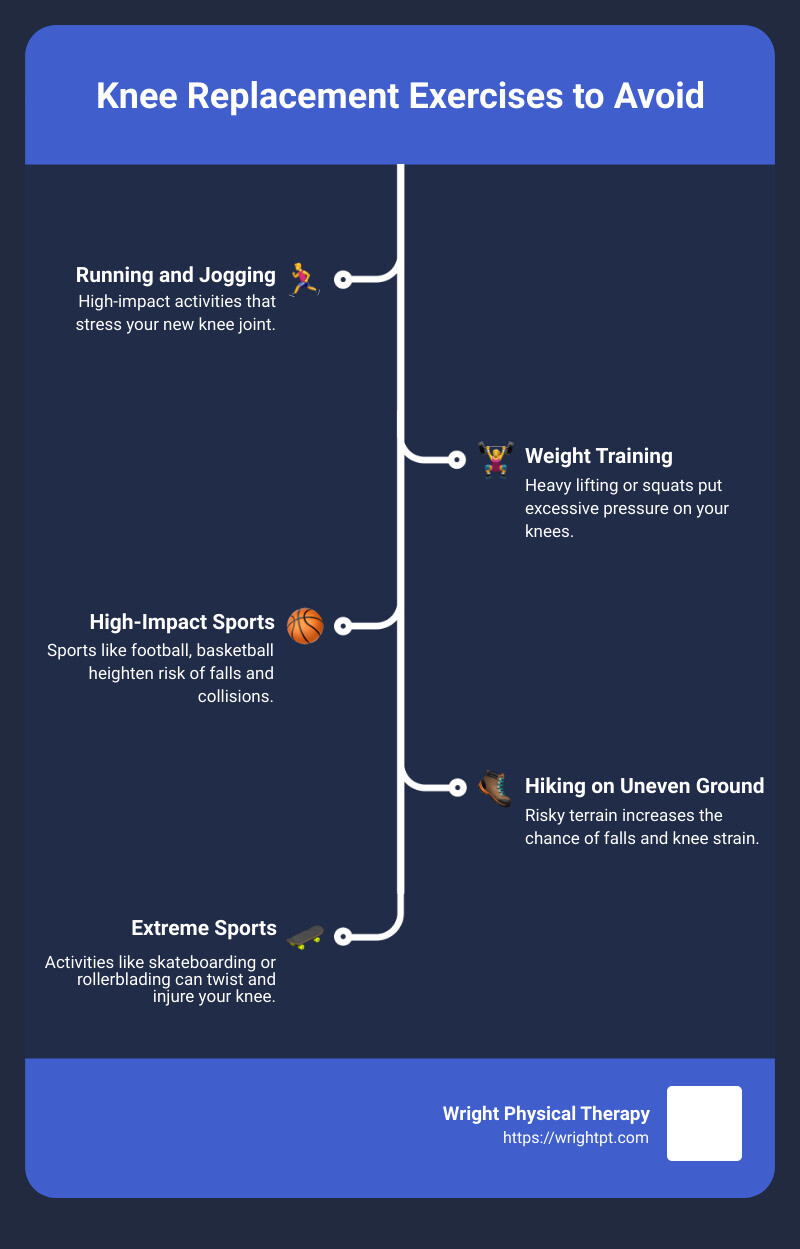
Avoid these exercises after a knee replacement:
– Running and jogging: These high-impact activities can stress your new knee joint.
– Weight training: Heavy lifting or squats can put excessive pressure on your knees.
– High-impact sports: Football, basketball, and similar sports pose a risk of falls and collisions.
– Hiking on uneven ground: Risky terrain increases the chance of falls and knee strain.
– Extreme sports: Skateboarding or rollerblading can twist and injure your knee.
At Wright Physical Therapy, our experienced team knows that a tailored recovery plan is essential for long-term success. My name is Bryan Wright, and I specialize in helping patients avoid ‘knee replacement exercises to avoid’ for a safe and effective recovery.
Top 5 Mistakes to Avoid After Knee Replacement
Doing Too Much Too Soon
Healing takes time, and everyone recovers at a different pace. Trying to do too much too soon can lead to setbacks. Bryan Wright, a specialist at Wright Physical Therapy, always advises patients to follow their recovery plans closely. Overexertion can cause unnecessary pain and prolong the recovery process.
Case Study: Jane, a 65-year-old patient, felt great two weeks after her surgery and decided to resume her gardening routine. Unfortunately, she ended up straining her knee, which delayed her recovery by several weeks.
Skipping Physio
Skipping your physiotherapy sessions is one of the worst things you can do. These sessions are tailored to help you regain mobility and strength. Skipping physio can slow down your recovery and lead to complications.
Quote: “Physiotherapy is essential for a smooth recovery,” says Dr. John Smith, a renowned orthopedic surgeon. “It helps in improving mobility and reducing pain.”
Ignoring Pain
Pain is your body’s way of telling you something is wrong. Ignoring severe pain can lead to further complications. If you experience sharp or persistent pain, consult your doctor immediately. They may adjust your medication or recommend alternative treatments.
Fact: Ignoring pain can lead to conditions like chronic pain syndrome, making it harder to manage in the long run.
Improper Wound Care
Proper wound care is crucial to avoid infections and other complications. Follow the instructions given by your healthcare provider to keep your wound clean and dry. Neglecting wound care can lead to infections that may require additional surgery.
Tip: Always wash your hands before touching your wound and change bandages as recommended.
Going It Alone
Recovery is hard, and going it alone can make it even harder. Whether it’s your surgeon, physiotherapist, or a family member, having a support system is crucial. They can help you with daily activities and ensure you’re following your recovery plan.
Real-life Example: Mark, a 70-year-old retiree, tried to manage his recovery alone. He missed several physio sessions and struggled with daily tasks, which slowed his progress. Once he enlisted the help of his family, his recovery improved significantly.

Knee Replacement Exercises to Avoid
High-Impact Sports
High-impact sports like football, basketball, soccer, rugby, and skiing put a lot of stress on your new knee joint. These activities involve sudden movements and intense physical contact, which can damage the prosthesis or delay healing.
Fact: A study found that 17.2% of people who had knee replacements fell at least once within 6 months post-surgery, mostly while walking. Imagine the risk during a high-impact sport!
Weight Training
While strength training is generally encouraged, heavy lifting, squats, and deadlifts should be avoided initially. These exercises put excessive pressure on your knee joint and can lead to complications.
Tip: Focus on light weights and resistance bands instead. They help build muscle without stressing the joint.
Running and Jogging
Running and jogging exert a lot of force on your knee joint. This can cause pain and may damage the implant.
Fact: The force on a knee joint while running is about three times your body weight. That’s a lot of stress for a new knee!
Alternative Exercises: Opt for low-impact activities like walking or cycling to stay active without harming your knee.
High-Risk Activities
Avoid activities where the risk of falling or twisting your knee is high. This includes hiking on uneven ground, skateboarding, and rollerblading.
Story: Jane, an avid hiker, tried to return to her favorite trails too soon after surgery. She ended up twisting her knee on uneven ground, which set her recovery back by months.
Prolonged Sitting
Sitting for long periods can increase the risk of blood clots and swelling. It also hampers fluid drainage in your lower leg.
Tip: Don’t sit for more than 45-60 minutes at a time during the first two weeks post-surgery. If you need to sit, prop your leg up to minimize swelling.
Safe Exercises to Promote Recovery
Walking
Walking is a fantastic way to start your recovery journey. Begin with short distances and use assistive devices like walkers or crutches if needed. Gradually increase the distance as you gain strength and confidence. This low-impact activity helps improve mobility and promotes blood circulation, reducing the risk of blood clots.
Cycling
Cycling on a stationary bike is another excellent low-impact exercise. Start with low resistance to avoid putting stress on your knee joint. Gradually increase the resistance and duration as your strength improves. Cycling helps maintain joint flexibility and muscle strength without the high impact of running or jogging.
Swimming
Swimming provides a full-body workout that’s easy on the joints. The buoyancy of the water supports your body, reducing the stress on your knee. Swimming or water aerobics can help improve your range of motion and strengthen the muscles around your knee. It’s a joint-friendly way to stay active and aid in your recovery.
Gentle Strength Training
Gentle strength training can be very beneficial in supporting your knee joint. Use light weights or resistance bands to perform exercises that target the muscles around your knee. This helps to build muscle support and stability. Focus on exercises like leg lifts, hamstring curls, and calf raises. Always start with low resistance and gradually increase as you get stronger.
Frequently Asked Questions about Knee Replacement Exercises
Can you damage a knee replacement with too much exercise?
Yes, you can damage your knee replacement if you overdo it. High-impact activities like running or heavy weight training can put too much stress on your new joint. This stress may loosen the implant and cause pain or other complications.
Gradual increase in activity is key. Start with light exercises and slowly build up your strength and endurance. Always follow your consultant’s guidance to ensure you’re not putting your knee at risk.
How many times a day should I exercise after total knee replacement?
After a knee replacement, your doctor or physical therapist will likely recommend exercising for 20-30 minutes, 2-3 times daily. This could include activities like walking or using a stationary bike.
In addition to your exercise sessions, aim to walk for 30 minutes, 2-3 times a day. This helps to keep your knee flexible and improves overall mobility. Always listen to your body and avoid overexertion.
What is the best exercise machine after knee replacement?
The elliptical machine is often recommended after knee replacement surgery. It provides a low-stress, gentle aerobic workout that is easy on the joints. Unlike running or jogging, using an elliptical reduces the impact on your knees while still offering a good cardiovascular workout.
Other good options include a stationary bike and recumbent bike, which also offer joint-friendly exercise. Always consult with your physical therapist to find the best machine for your recovery.
Conclusion
At Wright Physical Therapy, we understand that your recovery journey after a knee replacement is unique. Our goal is to provide personalized care that meets your specific needs and helps you get back to doing the activities you love.
Personalized Care
Our team of licensed physical therapists tailors each treatment plan to fit your individual needs. We analyze your movement, strength, and coordination to develop a plan that optimizes your recovery. By focusing on your particular goals and limitations, we can help you regain mobility and strength effectively.
Community Impact
We are proud to be a part of the community and dedicated to improving the lives of our patients. Our commitment to excellence in physical therapy has a positive impact on the well-being of each person we treat. We believe that a strong, healthy community starts with individuals who are empowered to live their best lives.
Patient Education
Educating our patients is a cornerstone of our approach. We make sure you understand your treatment plan, the exercises you need to perform, and how to take care of your new knee. Knowing what to expect and how to manage your recovery can make a big difference in your outcome.
Are you ready to take the next step in your recovery? Our dedicated team at Wright Physical Therapy is here to guide you through every phase of your journey.
Contact us today to schedule an appointment and start your path to a smooth and successful recovery.