

Introduction
Pelvic floor therapy exercises are essential for strengthening the muscles that support your bladder, intestines, and, in women, the uterus. These exercises can offer significant relief from issues like urinary incontinence, fecal incontinence, and pelvic pain. Whether you’re recovering from childbirth, surgery, or simply looking to improve your pelvic health, these exercises can make a huge difference.
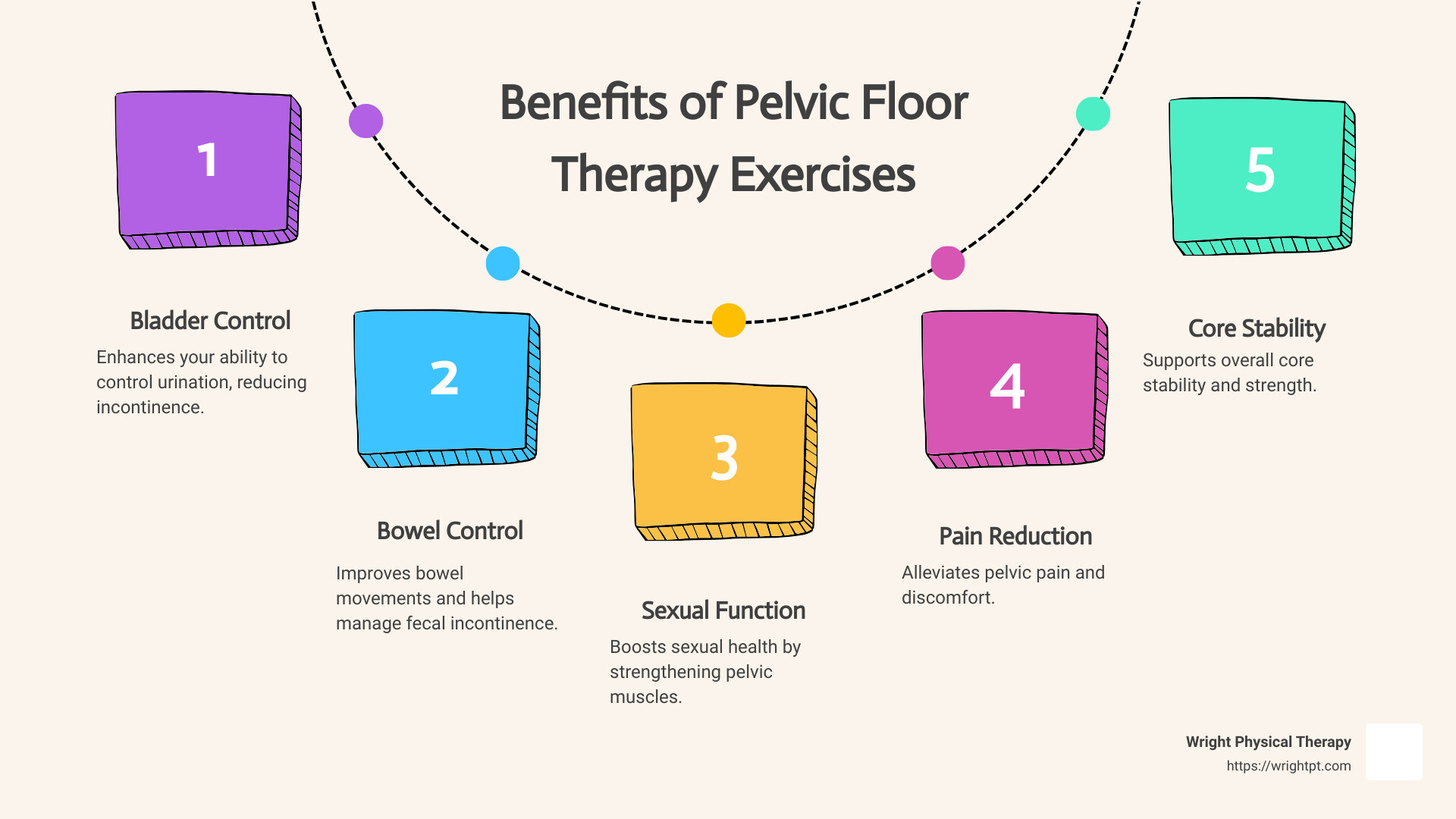
Quick Benefits of Pelvic Floor Therapy Exercises:
- Improved bladder and bowel control
- Enhanced sexual function
- Reduced pelvic pain
- Better core stability
Pelvic floor therapy is not just for women; men can also benefit, especially those recovering from prostate surgery or dealing with incontinence.
Understanding Pelvic Floor Therapy Exercises
Pelvic floor therapy exercises are specialized movements designed to strengthen the muscles of the pelvic floor. These muscles support the bladder, uterus, and bowel, playing a crucial role in urinary and bowel control, as well as sexual health.
Definition:
Pelvic floor therapy exercises involve contracting and relaxing the pelvic floor muscles. Think of these exercises as a workout for the muscles that support your pelvis. They are often recommended for people experiencing issues like urinary incontinence, fecal incontinence, and pelvic pain.
Purpose:
The main goal of these exercises is to strengthen the pelvic floor muscles. By doing so, you can improve bladder and bowel control, enhance sexual function, and reduce pelvic pain. These exercises are beneficial for both men and women. For example, women may need them postpartum, while men might benefit after prostate surgery.
Mechanism:
Pelvic floor therapy exercises work by engaging the muscles that you use to stop the flow of urine. Here’s how they function:
-
Identification of Muscles:
The first step is to identify the right muscles. You can do this by trying to stop your urine midstream. The muscles you engage are your pelvic floor muscles. -
Contraction and Relaxation:
Once you’ve identified the right muscles, the exercises involve contracting (tightening) and then relaxing these muscles. For example, you might hold the contraction for a count of 10, then relax for a count of 10. -
Repetition:
Repetition is key. Typically, you’ll aim for 10 repetitions, 3 to 5 times a day. Consistency is crucial for seeing results. -
Advanced Techniques:
After a few weeks, you can incorporate more advanced techniques like doing a single pelvic floor contraction when you’re likely to leak (e.g., while getting out of a chair).
Biofeedback and Electrical Stimulation:
If you’re unsure whether you’re doing the exercises correctly, tools like biofeedback can help. Biofeedback involves placing electrodes on the abdomen and along the anal area to monitor muscle contractions. This can be especially useful for visual learners who benefit from seeing which muscles are contracting.
Common Pelvic Floor Exercises:
-
Kegels:
These are the most common pelvic floor exercises. They involve squeezing and holding the pelvic floor muscles. -
Diaphragmatic Breathing:
This encourages a functional relationship between the diaphragm and the pelvic floor. Lie on your back, place one hand on your stomach and the other on your chest, and breathe deeply. -
Bridge Pose:
This exercise not only targets the pelvic floor but also strengthens the glutes and lower back.
By understanding the definition, purpose, and mechanism of pelvic floor therapy exercises, you can better appreciate their importance and how they can improve your overall health.
Key Techniques in Pelvic Floor Therapy Exercises
Kegel Exercises
Kegel exercises are a cornerstone of pelvic floor therapy exercises. They focus on contracting and relaxing the muscles that support the bladder, urethra, and rectum.
How to do it:
1. Find a comfortable position—lying down, sitting, or standing.
2. Tighten the muscles you use to stop the flow of urine.
3. Hold the contraction for 3-5 seconds.
4. Relax for 3-5 seconds.
5. Repeat 10 times, gradually increasing the hold to 10 seconds.
Pro Tip: Avoid tightening your stomach, thighs, or buttocks. Breathe normally.
Diaphragmatic Breathing
Diaphragmatic breathing helps your pelvic floor muscles work efficiently and promotes relaxation.
How to do it:
1. Lie on your back with your hands on your abdomen.
2. Inhale deeply, letting your abdomen rise.
3. Exhale, pulling your abdominal muscles inward.
4. Practice in different positions like sitting, standing, or on all fours.
Why it works: This exercise encourages a functional relationship between the diaphragm and the pelvic floor, aiding stress management and relaxation.
Bridge Pose
Bridge Pose is a yoga exercise that strengthens the pelvic floor, glutes, and lower back.
How to do it:
1. Lie on your back with knees bent and feet flat on the floor.
2. Place your arms by your sides, palms facing down.
3. Lift your hips towards the ceiling, keeping feet and shoulders on the floor.
4. Hold for 5-10 breaths, then slowly lower your hips back down.
5. Repeat 2-3 times.
Pro Tip: Keep your core and pelvic muscles engaged to avoid pressure on your neck or lower back.
Bird Dogs
Bird Dogs are excellent for core stability and engaging the pelvic floor muscles.
How to do it:
1. Start on all fours with wrists under shoulders and knees under hips.
2. Extend your right arm forward and left leg back, keeping both in line with your body.
3. Hold for a few seconds, then return to the starting position.
4. Repeat with your left arm and right leg.
5. Alternate sides for 10-15 repetitions.
Why it works: This exercise improves balance, posture, and pelvic muscle engagement.
Toe Taps
Toe Taps increase core stability and activate the pelvic muscles.
How to do it:
1. Lie on your back with knees bent and feet on the floor.
2. Lift both legs to a tabletop position.
3. Lower one leg, tapping your toe on the floor while keeping your core engaged.
4. Return to tabletop and repeat with the other leg.
5. Continue alternating legs for 12-20 repetitions.
Pro Tip: Keep your lower back flat on the floor to maintain proper form.
By incorporating these pelvic floor therapy exercises into your routine, you can strengthen your pelvic muscles, improve core stability, and enhance overall health. Next, we’ll discuss how to perform these exercises correctly.
How to Perform Pelvic Floor Therapy Exercises Correctly
Performing pelvic floor therapy exercises correctly is crucial for achieving the best results. Let’s break down the essentials: posture, breathing, frequency, and intensity.
Posture
Good posture is the foundation of effective pelvic floor exercises. Whether you’re sitting, standing, or lying down, maintain a neutral spine.
- Sitting or Standing: Keep your back straight, shoulders relaxed, and feet flat on the floor.
- Lying Down: Lie on your back with knees bent and feet flat. This position helps you focus on engaging the right muscles.
Breathing
Proper breathing enhances the effectiveness of pelvic floor exercises. Diaphragmatic breathing, also known as deep breathing, is particularly beneficial.
- Inhale deeply through your nose, allowing your belly to rise.
- Exhale slowly through your mouth, letting your belly fall.
- Focus on relaxing your pelvic floor muscles as you inhale and gently contracting them as you exhale.
Frequency
Consistency is key. How often you perform these exercises can significantly impact your progress.
- Aim for daily practice. Start with 3 sets of 10 repetitions for Kegel exercises.
- For other exercises like bridges or toe taps, begin with 10-15 repetitions and gradually increase.
Intensity
Intensity should be tailored to your current fitness level and gradually increased.
- Start slow: Begin with shorter holds (5 seconds) and fewer repetitions.
- Increase gradually: As your muscles strengthen, extend the hold time (up to 10 seconds) and increase repetitions.
Pro Tip: If you’re unsure about your form or experiencing discomfort, consult a pelvic floor physical therapist. They can guide you to ensure you’re engaging the right muscles and avoiding common mistakes.
By focusing on posture, breathing, frequency, and intensity, you can maximize the benefits of your pelvic floor therapy exercises. Up next, we’ll explore common mistakes and how to avoid them.
Common Mistakes and How to Avoid Them
When it comes to pelvic floor therapy exercises, making common mistakes can hinder your progress or even cause discomfort. Let’s look at three frequent errors and how to avoid them.
Overexertion
Overexertion happens when you push your muscles too hard, too soon. This can lead to muscle fatigue or even injury.
Avoid it by:
– Starting Slow: Begin with shorter hold times and fewer repetitions.
– Listening to Your Body: If you feel pain or extreme discomfort, stop and rest.
– Gradually Increasing Intensity: As your muscles get stronger, slowly increase the duration and intensity of the exercises.
Incorrect Muscle Targeting
Incorrect muscle targeting means you’re not engaging the right muscles. This can make the exercises ineffective.
Avoid it by:
– Finding the Right Muscles: Try stopping your urine flow midstream once or twice to identify the pelvic floor muscles.
– Using Proper Form: Lie down with knees bent and feet flat. Inhale, then exhale and gently squeeze the muscles around your urethra and anus.
– Consulting a Professional: If unsure, see a pelvic floor physical therapist for guidance.
Inconsistent Practice
Inconsistent practice can prevent you from seeing improvements. Consistency is key to strengthening your pelvic floor.
Avoid it by:
– Setting a Schedule: Aim to do the exercises at the same time each day.
– Tracking Progress: Use a journal or app to record your exercises and monitor improvement.
– Staying Motivated: Remember the benefits, like improved urinary continence and sexual health.
Pro Tip: Consistency and correct form are vital. If you’re struggling, don’t hesitate to consult a professional for personalized advice.
By avoiding these common mistakes, you can make the most out of your pelvic floor therapy exercises. Next, we’ll dive into effective exercises for specific needs, whether you’re recovering postpartum or looking to improve urinary incontinence.
Effective Pelvic Floor Therapy Exercises for Specific Needs
Pelvic floor therapy exercises can be tailored to address specific conditions. Let’s explore exercises for postpartum recovery, urinary incontinence, and sexual health enhancement.
For Postpartum Recovery
Childbirth can weaken pelvic floor muscles, leading to issues like incontinence and pelvic organ prolapse. Rebuilding strength is crucial.
Diaphragmatic Breathing:
– Lie on your back with knees bent.
– Place your hands on your belly.
– Inhale deeply through your nose, feeling your belly rise.
– Exhale slowly through your mouth, letting your belly fall.
– Repeat 10 times, twice daily.
Kegels:
– Tighten your pelvic floor muscles for 5 seconds.
– Relax for 5 seconds.
– Repeat 10 times, 3 times a day.
Bridge Exercise:
– Lie on your back with knees bent and feet flat.
– Lift your hips by squeezing your glutes and pelvic floor.
– Hold for a few seconds, then lower.
– Repeat 10 times.
These exercises help regain control and strength in your pelvic region.
For Urinary Incontinence
Urinary incontinence can be a frustrating condition. Strengthening the pelvic floor muscles can help manage and reduce symptoms.
Kegels:
– Identify the right muscles by stopping urine flow midstream (only once for identification).
– Tighten these muscles for 10 seconds.
– Relax for 10 seconds.
– Do 10 repetitions, 3-5 times a day.
Bird Dog:
– Get on hands and knees, wrists under shoulders, knees under hips.
– Extend your right arm and left leg simultaneously.
– Hold for a few seconds, then switch sides.
– Repeat 10 times on each side.
Toe Taps:
– Lie on your back with knees bent at a 90-degree angle.
– Lower one foot to tap the floor, keeping your back flat.
– Alternate legs for 10 repetitions.
These exercises can improve bladder control and reduce leakage.
For Sexual Health Enhancement
Strong pelvic floor muscles contribute to better sexual function and satisfaction for both men and women.
Kegels:
– Tighten pelvic floor muscles as if stopping urine flow.
– Hold for 10 seconds, then relax for 10 seconds.
– Repeat 10 times, 3 times a day.
Bridge Exercise:
– Lie on your back with knees bent.
– Lift your hips, squeezing your glutes and pelvic floor.
– Hold for a few seconds, then lower.
– Repeat 10 times.
Deep Squats:
– Stand with feet hip-width apart.
– Lower into a squat, keeping your back straight.
– Hold for a few seconds, then rise.
– Repeat 10 times.
Strengthening these muscles can enhance sexual pleasure and performance.
By customizing your pelvic floor therapy exercises to your specific needs, you can achieve better results and improve your overall quality of life. Next, we’ll address some frequently asked questions about pelvic floor therapy.
Addressing FAQs in Pelvic Floor Therapy
How Long Does It Take to Strengthen the Pelvic Floor?
Strengthening your pelvic floor muscles isn’t an overnight process. On average, it takes 4 to 6 weeks to notice some improvement, and up to 3 months for significant changes. This timeline can vary based on factors like consistency, underlying conditions, and how often you perform the exercises. Patience and regular practice are key.
Can Men Perform Pelvic Floor Exercises?
Absolutely! Pelvic floor exercises are not just for women. Men can benefit too, especially those dealing with urinary incontinence after prostate surgery or sexual health issues like erectile dysfunction. By doing exercises like Kegels, men can strengthen their pelvic floor muscles, improving bladder control and sexual function.
What Are the Signs of Improvement?
Signs that your pelvic floor muscles are getting stronger include:
- Reduced urine leakage
- Better bowel control
- Improved sexual function
- Less frequent urges to urinate
Consistency in your exercise routine will lead to these positive changes. If you’re unsure about your progress, consider consulting a pelvic floor physical therapist for personalized guidance.
Incorporating Pelvic Floor Exercises into Daily Routine
At Home
Incorporating pelvic floor therapy exercises into your home routine can be simple and effective. Here’s how:
-
Morning Routine: Start your day with Kegels while brushing your teeth. Tighten your pelvic floor muscles for 5 seconds, then relax for 5 seconds. Repeat 10 times.
-
During Chores: Perform diaphragmatic breathing while doing household chores. Inhale deeply, expanding your belly, then exhale slowly, focusing on relaxing your pelvic floor.
-
Evening Wind Down: End your day with the Happy Baby Pose. Lie on your back, bring your knees toward your belly, and hold your feet. This stretch helps release tension in your pelvic floor muscles.
At Work
You can easily fit pelvic floor exercises into your workday without anyone noticing:
-
Seated Kegels: While sitting at your desk, discreetly do Kegel exercises. Tighten your pelvic floor muscles for a count of 10, then relax for 10 seconds. Aim for three sets of 10 repetitions throughout the day.
-
Standing Breaks: Take short breaks to stand up and do toe taps. Stand with feet hip-width apart, lift one foot and tap your toes forward, then switch. This helps engage your core and pelvic floor muscles.
-
Breathing Exercises: Practice diaphragmatic breathing during stressful moments. Inhale through your nose, letting your stomach expand, then exhale slowly. This can help you stay calm and keep your pelvic floor relaxed.
During Travel
Traveling doesn’t have to disrupt your pelvic floor routine. Here are some tips:
-
In the Car or Plane: Perform seated Kegels while sitting. Tighten and hold your pelvic floor muscles for a few seconds, then release. Repeat several times during your journey.
-
Hotel Room Routine: Dedicate a few minutes each morning and evening for bridge exercises. Lie on your back, lift your hips, hold for a few seconds, then lower. This strengthens your pelvic floor and core.
-
On-the-Go: Use waiting times, like standing in line, to do subtle pelvic floor contractions. Tighten your pelvic muscles and hold for a count of 10, then relax. This can be done without anyone noticing.
By integrating these simple exercises into your daily routine, you can maintain and enhance your pelvic floor strength, no matter where you are.
Conclusion
Strengthening your pelvic floor muscles is not just about immediate relief from symptoms like incontinence or pelvic pain. It’s about long-term benefits that can significantly improve your quality of life.
Long-term Benefits
A strong pelvic floor can help you maintain bladder and bowel control, support pelvic organs, and enhance sexual function. For postpartum women, it can mean a quicker recovery and fewer complications. For men, it can assist in recovery post-surgery and improve sexual health.
Dr. Apurva B. Pancholy, a urogynecologist at UT Physicians, emphasizes that pelvic floor muscle therapy is a “noninvasive and relatively low-risk treatment.” This makes it a first-line option for many patients dealing with pelvic floor disorders. Over time, consistent practice of these exercises can lead to substantial improvements in muscle strength and coordination.
Moreover, research shows that over 60% of pregnant people who perform Kegel exercises are less likely to experience urinary incontinence during late pregnancy. This highlights the importance of incorporating these exercises into your routine for long-term benefits.
Wright Physical Therapy
At Wright Physical Therapy, we understand the importance of a strong pelvic floor for overall well-being. Our specialized programs are designed to address your specific needs, whether you’re dealing with postpartum recovery, urinary incontinence, or any other pelvic floor issues.
Our approach is comprehensive, combining education, bladder training, and personalized exercise plans to ensure you get the best results. We also offer biofeedback and neuro retraining to help you better understand and control your pelvic floor muscles.
If you’re ready to take control of your pelvic health, don’t wait any longer. Contact Wright Physical Therapy today to schedule your consultation and start your journey towards a stronger, healthier pelvic floor.
By committing to a routine of pelvic floor therapy exercises, you can enjoy a life free from the limitations of pelvic floor disorders. Let’s work together to achieve your health goals.