

Introduction
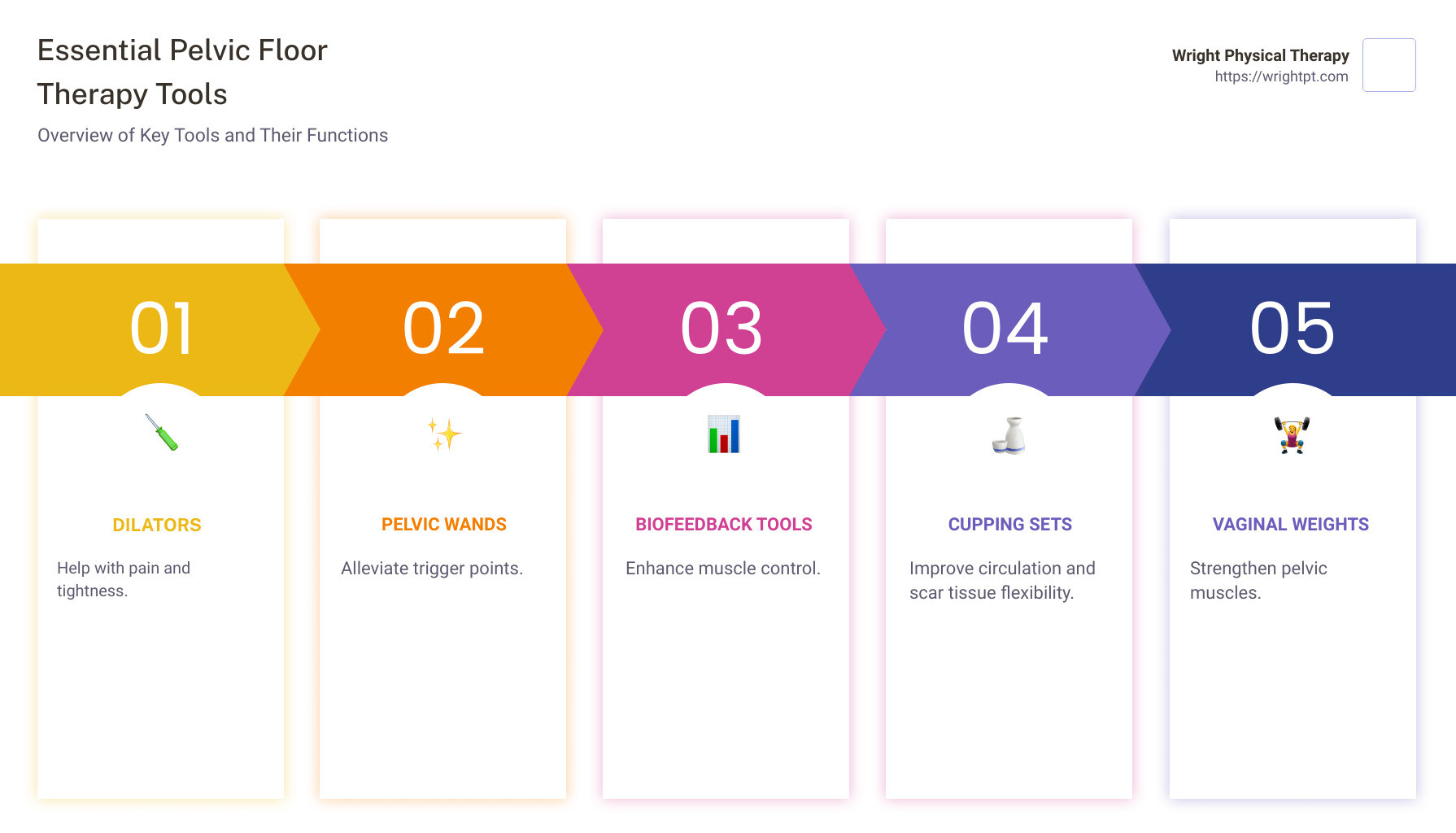
Pelvic floor therapy tools are crucial for both men and women looking to strengthen, relax, and rehabilitate their pelvic muscles. If you need a quick overview, here are the primary tools used in pelvic floor therapy:
- Dilators: Help with pain and tightness.
- Pelvic Wands: Alleviate trigger points.
- Biofeedback Tools: Enhance muscle control.
- Cupping Sets: Improve circulation and scar tissue flexibility.
- Vaginal Weights: Strengthen pelvic muscles.
- Lubricants: Essential for safe and comfortable use of internal devices.
Pelvic floor therapy can significantly improve one’s quality of life. It addresses a range of issues from urinary incontinence to chronic pelvic pain. Ignoring these problems can lead to further health complications. Tools like dilators and pelvic wands offer targeted solutions, aiding in effective treatment.
Using these devices under the guidance of a trained pelvic floor physical therapist makes therapy safer and more effective. Benefits include improved muscle strength, better bladder control, less pain, and enhanced sexual function.
Learn more about each tool and how to properly use them to maximize your recovery and well-being. Dive deeper into how pelvic floor therapy tools can change your life for the better.
Understanding Pelvic Floor Therapy Tools
Pelvic floor therapy tools are specialized devices designed to help strengthen, relax, and improve the function of the pelvic floor muscles. These muscles support organs like the bladder, uterus, and rectum and play a crucial role in urinary and bowel control, sexual function, and overall core stability.
Definition
Pelvic floor therapy tools are medical devices used to treat dysfunctions of the pelvic floor muscles. These tools can be used to either strengthen weak muscles or relax overly tight ones, depending on the specific condition being treated.
Purpose
The primary goal of using pelvic floor therapy tools is to improve the function of the pelvic floor muscles. This can lead to several benefits:
- Enhanced Muscle Strength: Helps in better support of pelvic organs.
- Improved Bladder Control: Reduces instances of incontinence.
- Reduced Pain: Alleviates discomfort caused by muscle tightness or dysfunction.
- Enhanced Sexual Function: Improves sensation and function during intimacy.
Types
There are several types of pelvic floor therapy tools, each serving a different purpose:
Dilators
Dilators are cylinder-shaped tools made of silicone or hard plastic. They come in various sizes and are used to progressively stretch the vagina or rectum. They are particularly helpful for those experiencing pain during insertion or sexual activity, vaginal narrowing, or vaginal atrophy.
Pelvic Wands
Pelvic wands are designed to relieve trigger points within the pelvic floor muscles. These tools have a curved “S” shape that makes it easier to reach deeper or more difficult-to-access muscles like the obturator internus and puborectalis.
Biofeedback Tools
Biofeedback tools provide real-time feedback on pelvic floor muscle activity. Devices like the Perifit and Elvie convert muscle activity into visual or audio information, helping users improve muscle control. Even a simple handheld mirror can serve as a biofeedback tool by showing how the muscles function during exercises.
Cupping Sets
Cupping sets use suction to create myofascial decompression, improving circulation and lymphatic flow. These are useful for treating scar tissue and enhancing muscle flexibility.
Vaginal Weights
Vaginal weights are small, weighted devices inserted into the vagina. They help strengthen the pelvic floor muscles by adding resistance during exercises. These are particularly useful for improving bladder control and managing pelvic organ prolapse.
Lube
Lubrication is essential for all internal treatments. A generous amount of lube ensures comfort and safety during the use of various pelvic floor therapy tools.
Each of these tools can be incredibly effective, but it’s important to consult with a pelvic floor physical therapist to determine the right ones for your specific needs.
Learn more about each tool and how to properly use them to maximize your recovery and well-being. Dive deeper into how pelvic floor therapy tools can change your life for the better.
Essential Pelvic Floor Therapy Tools
Dilators
Dilators are smooth, cylinder-shaped tools made of silicone or hard plastic. They come in various sizes and are used to safely and progressively stretch the vagina or rectum. They are particularly helpful for people experiencing pain with insertion, vaginal narrowing, or limitations from scar tissue.
Case Study: A patient named Sarah struggled with painful sex due to vaginismus. Her pelvic floor physical therapist recommended starting with a small dilator. Over time, Sarah was able to progress to larger sizes, which significantly reduced her pain and improved her quality of life.
Pelvic Wands
Pelvic wands are designed to alleviate pain and symptoms associated with trigger points in the pelvic floor muscles. These “S”-shaped tools can be inserted vaginally or rectally to reach deeper or more difficult-to-access spots.
Quote: “I use this product when my pain is unbearable. The wand reaches the areas where my pain is bothering me the most. It helps the pelvic muscle relax which decreases the pain. I love it!” – Stacey B., Verified Buyer
Biofeedback Tools
Biofeedback tools provide real-time feedback to help improve awareness and control of your pelvic floor muscles. These can include devices like the Perifit and Elvie, which convert muscle activity into visual or audio information. Even a simple handheld mirror can be an effective biofeedback tool.
Example: A patient using a biofeedback device noticed that she could better control her pelvic floor muscles by visualizing the feedback, leading to faster improvement in symptoms.
Cupping Sets
Cupping sets create a suction effect over the skin to improve circulation and treat scar tissue. They can be made of silicone, plastic, or glass and are used to enhance flexibility and lymphatic flow.
Fact: Cupping can be particularly beneficial for treating scar tissue from abdominal incisions or Cesarean section scars, making it a versatile tool in pelvic floor therapy.
Vaginal Weights
Vaginal weights are used to strengthen and provide awareness to the pelvic floor muscles. They come in progressively heavier sizes and can be used for conditions like improving bladder control and managing pelvic organ prolapse.
Warning: If you have extra tension in your pelvic floor muscles, using vaginal weights may worsen your condition. Always consult with a pelvic health physical therapist before starting.
Lube, Lube, and More Lube
Lubrication is crucial for all internal treatments in pelvic floor therapy. A generous amount of lube ensures comfort and safety during the use of various tools, from dilators to pelvic wands.
Tip: Always use a high-quality, body-safe lubricant to prevent irritation and enhance the effectiveness of your pelvic floor therapy tools.
Next, we’ll dive into how to use these tools properly to maximize their benefits and ensure your safety.
How to Use Pelvic Floor Therapy Tools
Insertion Techniques
Using pelvic floor therapy tools like dilators or pelvic wands might seem intimidating at first, but with the right techniques, it gets easier.
-
Start with Relaxation: Before inserting any tool, take a few minutes to relax. Deep breathing can help. Inhale deeply through your nose, letting your belly expand, and exhale slowly through your mouth.
-
Lubricate Generously: Apply a generous amount of water-based lubricant to the tool and the opening of the vagina or rectum. This reduces friction and makes insertion more comfortable.
-
Choose the Right Position: Lie on your back with your knees bent and feet flat on the floor. Alternatively, you can lie on your side with a pillow between your knees for support.
-
Insert Gently: On an exhale, gently insert the tool. For pelvic wands, decide which end to use based on the area you need to target. The curved end is for closer trigger points, while the longer end reaches deeper spots.
-
Sweep and Compress: Once inserted, gently sweep the tool until you find a tender point. Apply gentle pressure, similar to checking a tomato for ripeness, and hold for 1-2 minutes to allow the muscle to release.
Safety Tips
Safety is paramount when using pelvic floor therapy tools. Here are some tips to keep in mind:
-
Consult a Professional: Always consult with a pelvic health physical therapist to ensure you’re using the right tool and technique for your specific condition.
-
Go Slow: Never rush the process. Gentle and slow movements are less likely to cause discomfort or injury.
-
Listen to Your Body: If you feel pain (beyond mild discomfort), stop immediately and consult your therapist.
-
Maintain Cleanliness: Clean your tools before and after each use with mild soap and water to prevent infections.
-
Use the Right Lubricant: Stick to water-based lubricants to preserve the integrity of silicone tools and avoid irritation.
Frequency of Use
The frequency of using pelvic floor therapy tools depends on your individual needs and the guidance of your therapist.
-
Dilators: Typically used once or twice a day, gradually increasing the size as comfort improves.
-
Pelvic Wands: Can be used daily or every other day, focusing on different trigger points each session.
-
Vaginal Weights: Start with short sessions (a few minutes) and gradually increase the duration as your strength improves. Aim for three to four times a week.
Consistency is key. Regular use, as advised by your therapist, will yield the best results.
Next, we’ll explore the benefits of using these tools and how they can improve your pelvic health.
Benefits of Using Pelvic Floor Therapy Tools
Using pelvic floor therapy tools can provide a range of benefits that significantly improve your quality of life. Let’s dive into some of the key benefits:
Improved Muscle Strength
Pelvic floor muscles play a crucial role in supporting the bladder, uterus, and rectum. Over time, these muscles can weaken due to factors like childbirth, aging, or surgery. Strengthening these muscles is essential for maintaining proper organ function and overall pelvic health.
Vaginal weights are particularly effective in building muscle strength. These weights come in progressively heavier sizes, allowing you to gradually increase resistance as your muscles become stronger. According to Dr. Suzanne, strong pelvic floor muscles contribute to better bladder control and core stability.
Enhanced Sexual Function
A strong and healthy pelvic floor can significantly enhance sexual function. Pelvic floor muscles are involved in sexual arousal and orgasm. Weak or dysfunctional muscles can lead to discomfort and reduced sexual satisfaction.
Pelvic wands can help alleviate trigger points that contribute to pain or dysfunction during sexual activity. By releasing these tight knots, you can experience improved sensation and comfort. Additionally, tools like biofeedback devices provide real-time feedback, helping you better understand and control your pelvic floor muscles, leading to enhanced sexual experiences.
Reduced Pain
Pain in the pelvic area can be debilitating and affect various aspects of your life. Conditions like vaginal atrophy, scar tissue, or muscle tightness can cause significant discomfort.
Dilators are useful for anyone experiencing pain with insertion or sexual activity. They help stretch the vagina or rectum safely and progressively, reducing pain over time. Pelvic wands are also effective for targeting deeper or hard-to-reach trigger points, providing relief from chronic pain.
Better Bladder Control
Bladder control issues, such as stress urinary incontinence, are common and can be distressing. Strengthening the pelvic floor muscles can help manage and even eliminate these problems.
Biofeedback tools like the Perifit and Elvie offer real-time feedback on your muscle activity, helping you improve bladder control through targeted exercises. Vaginal weights can also be used to strengthen the muscles that support the bladder, reducing the frequency of leaks and improving overall bladder function.
Using the right pelvic floor therapy tools can make a significant difference in your pelvic health. From enhancing muscle strength to reducing pain and improving bladder control, these tools offer a comprehensive approach to managing and improving your pelvic floor function.
Next, we’ll answer some frequently asked questions about pelvic floor therapy tools to help you get started on your journey to better pelvic health.
Frequently Asked Questions about Pelvic Floor Therapy Tools
What are the best pelvic floor therapy tools for beginners?
For beginners, starting with simple and easy-to-use tools is key. Vaginal dilators and pelvic wands are often recommended.
-
Vaginal Dilators: These are smooth, tube-shaped devices that come in various sizes. They help gradually stretch the vaginal or rectal openings and are great for easing into pelvic floor therapy. They are particularly useful for conditions like vaginismus and dyspareunia.
-
Pelvic Wands: These tools are designed for self-trigger point release in tight pelvic floor muscles. Their curved ends make it easier to reach and treat hard-to-access muscles.
Both tools can be made of silicone or plastic and may include features like vibration for added therapeutic benefit.
How often should I use pelvic floor therapy tools?
The frequency of use depends on your specific condition and treatment plan. Generally, using pelvic floor therapy tools 2-3 times a week is a good starting point.
-
Dilators: Start with a smaller size and gradually increase the size as comfort improves. Consistency is key, so aim for regular sessions, but always follow the advice of your pelvic floor physical therapist.
-
Pelvic Wands: Use them as needed to relieve muscle tension and discomfort. Your therapist can guide you on the best frequency based on your individual needs.
Consistency and following a structured plan can lead to noticeable improvements over time.
Can pelvic floor therapy tools help with incontinence?
Yes, pelvic floor therapy tools can significantly help with incontinence, particularly stress urinary incontinence.
-
Poise Impressa and Uresta: These tools are specifically designed to help manage stress urinary incontinence. They work by providing support to the urethra, reducing leakage during activities that increase abdominal pressure, like coughing or exercising.
-
Vaginal Weights: These can also be beneficial. They help strengthen the pelvic floor muscles, which support the bladder and improve control. However, they should be used under the guidance of a pelvic floor physical therapist to ensure they are appropriate for your condition.
Using these tools can help improve bladder control and reduce the frequency of leaks, enhancing your overall quality of life.
Understanding and using the right pelvic floor therapy tools can make a significant difference in managing and improving your pelvic health. From beginners to those dealing with incontinence, these tools offer practical solutions tailored to individual needs.
Next, let’s explore the impact of these tools on your overall health and how Wright Physical Therapy can support your journey to better pelvic health.
Conclusion
The impact of pelvic floor therapy tools on your overall health cannot be overstated. By incorporating these tools into your routine, you can experience a range of benefits from improved muscle strength to enhanced sexual function and better bladder control.
Improved Muscle Strength: Regular use of tools like vaginal weights and biofeedback devices can help strengthen your pelvic floor muscles. This, in turn, supports your bladder, bowel, and sexual function, leading to a more active and confident lifestyle.
Enhanced Sexual Function: Tools like pelvic wands can help alleviate pain and discomfort during intercourse by addressing trigger points and muscle tension. This can lead to a more satisfying and pain-free intimate life.
Reduced Pain: Whether it’s from childbirth, surgery, or chronic conditions, pain in the pelvic area can be debilitating. Using dilators and cupping sets can help reduce scar tissue and improve flexibility, making daily activities more comfortable.
Better Bladder Control: For those dealing with incontinence, tools like vaginal weights and biofeedback devices can help you regain control over your bladder, reducing leaks and enhancing your quality of life.
At Wright Physical Therapy, we understand the importance of a healthy pelvic floor and are committed to helping you achieve it. Our specialized programs and experienced therapists can guide you through the use of these tools, ensuring you get the most out of your therapy.
Ready to take the next step in your pelvic health journey? Visit our Pelvic Floor Therapy page to learn more about our services and how we can support you.
Happy Healing!