

Understanding Pelvic Floor Therapy: What to Expect
Pelvic floor therapy what to expect: When you embark on pelvic floor therapy, you can anticipate various stages tailored to your needs.
Here’s a quick overview of what to expect:
- Initial Consultation: Discussion of symptoms, medical history review.
- Physical Examination: Evaluation of posture, back, hips, and internal assessment.
- Individualized Treatment Plan: Customized exercises, stretches, and manual therapy.
Pelvic floor disorders—including urinary incontinence, pelvic pain, and pelvic organ prolapse—can significantly impact your quality of life. Thankfully, physical therapy offers a minimally invasive and highly effective treatment choice for these issues.
Pelvic floor therapy involves specific techniques aimed at either strengthening or relaxing your pelvic muscles to help rectify many common but distressing concerns. By improving core stability, it enhances control over urination, bowel movements, and even sexual function.
At Wright Physical Therapy, we tailor our approach to meet your unique needs, ensuring privacy and comfort throughout your treatment journey.
I’m Bryan Wright. With experience in high-skilled physical therapy, I strive to help people alleviate suffering and improve their quality of life. Here’s what you need to know as you consider pelvic floor therapy.
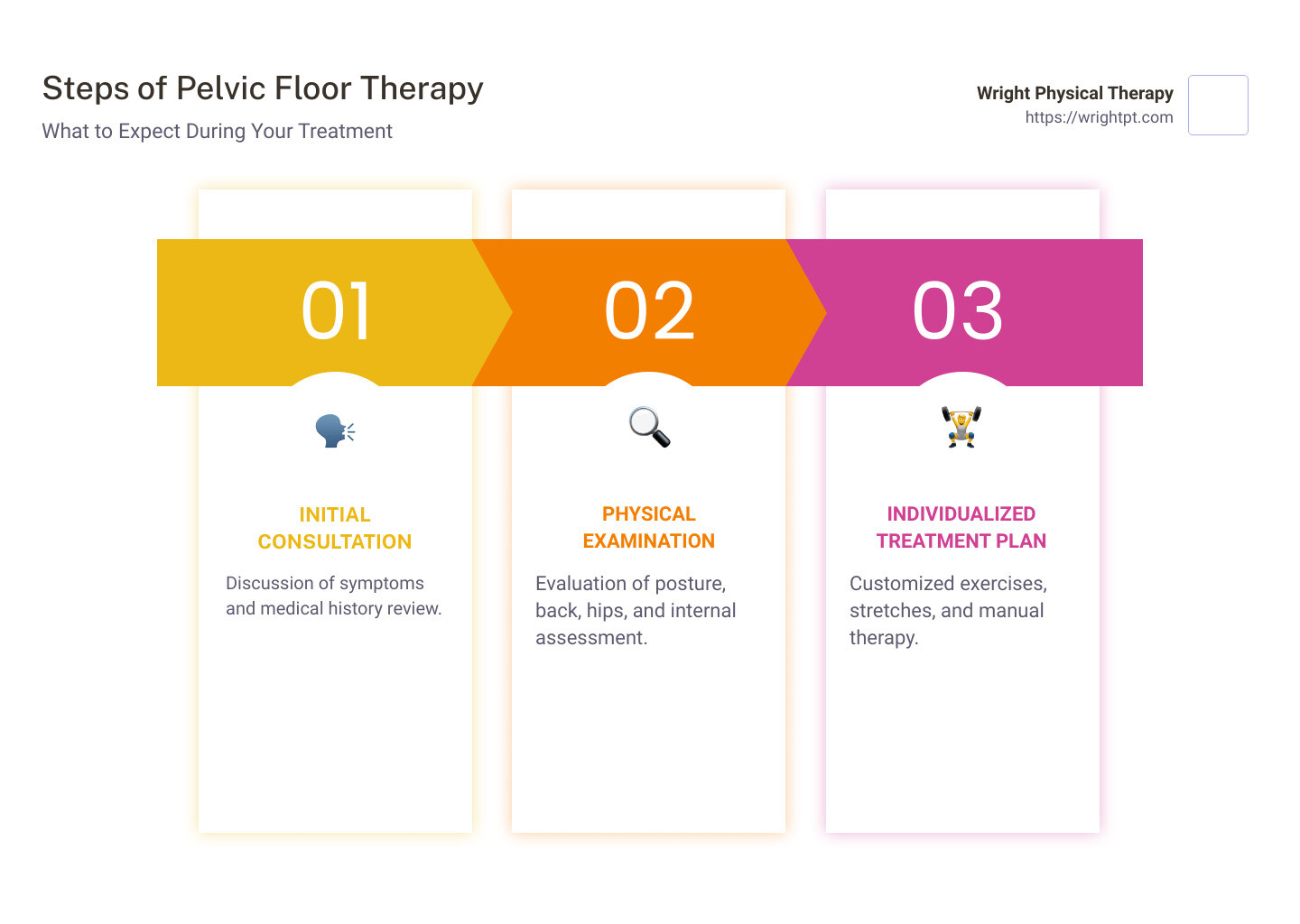
What to Expect During Pelvic Floor Therapy
Initial Consultation
Your first visit to Wright Physical Therapy begins with an initial consultation. This is where we get to know you and understand your concerns. We’ll discuss your symptoms and medical history. You’ll have the chance to talk about your lifestyle and any emotional factors that might be affecting your well-being.
Expect questions about your daily routine, diet, exercise habits, and stress levels. This helps us build a complete picture of your health and tailor a treatment plan that fits your needs.
Your comfort is our priority. We aim to make you feel at ease right from the start.
Physical Examination
Next, we move on to the physical examination. This involves a series of assessments to understand your pelvic floor function better.
Posture Evaluation: We’ll check your posture to see if it contributes to your symptoms. Poor posture can affect your pelvic floor muscles.
Back and Hips Assessment: We’ll also examine your back and hips. These areas are closely linked to pelvic health. Tightness or misalignment here can impact your pelvic floor.
Internal Examination: If needed, we may perform an internal exam. This is optional and entirely up to you. Using a gloved finger, we can assess the muscle tone, elasticity, and any pain in your pelvic floor. This helps us pinpoint the exact issues and plan effective treatments.
Biofeedback and Sensors: Sometimes, we use biofeedback to help you understand how your muscles work. Sensors placed on your body give real-time feedback on a computer screen. This can show you how well you’re contracting and relaxing your pelvic floor muscles.
Individualized Treatment Plan
After the consultation and examination, we develop a personalized treatment plan. This plan is tailored to address your specific symptoms and goals.
Exercises and Stretches: We’ll suggest exercises to strengthen or relax your pelvic floor muscles. These might include Kegel exercises or deep squat stretches.
Manual Therapy: Hands-on techniques like trigger point release, visceral mobilization, and scar tissue release can help alleviate pain and improve muscle function.
Biofeedback Therapy: Using biofeedback, we can guide you in controlling your pelvic floor muscles better. This is especially useful for learning how to contract and relax your muscles effectively.
Electrical Stimulation: Sometimes, we use electrical stimulation (E-stim) to activate your pelvic floor muscles. This can be particularly helpful if you have trouble feeling or controlling these muscles.
Home Exercises: You’ll also receive exercises to do at home. These are crucial for making steady progress. Consistency is key, and we’ll provide clear instructions to ensure you can practice correctly.
Throughout your therapy, we prioritize your privacy and comfort. Each session takes place in a private room, and we respect your boundaries. Your therapist is always available to answer questions and address any concerns.
By the end of your first visit, you’ll have a clear understanding of your treatment plan and the steps ahead. This knowledge empowers you to take control of your pelvic health and work towards a better quality of life.
Next, we’ll discuss the common techniques used in pelvic floor therapy and how they can benefit you.
Common Pelvic Floor Therapy Techniques
Pelvic floor therapy uses various techniques to help strengthen and relax the pelvic floor muscles. These methods aim to improve bladder control, reduce pain, and enhance overall pelvic health. Here are some common techniques:
Kegel Exercises
Kegel exercises are simple but effective. They involve repeatedly tightening and relaxing the pelvic floor muscles. These exercises can help improve muscle strength, coordination, and control. Kegels are especially helpful for stress urinary incontinence and can even improve sexual health by increasing blood flow and lubrication.
Deep Squat Stretch
The deep squat stretch is another effective exercise. It helps to open and release the pelvic floor muscles.
Here’s how to do it:
- Stand with your feet hip-distance apart and your toes slightly outward.
- Inhale and relax your belly.
- Exhale, engage your core, and squat down.
- Let your knees open outward and hold the squat.
- Breathe deeply as you focus on relaxing your pelvic floor muscles.
Trigger Point Release
Trigger point release targets sensitive areas in muscles or connective tissue that cause pain. The therapist applies firm, gentle pressure to these points to relieve pain and improve muscle function. This method can be particularly beneficial for reducing pelvic pain.
Visceral Mobilization
Visceral mobilization is a gentle technique that helps restore normal movement to internal organs like the bladder and intestines. This method reduces pain and improves organ function by gently manipulating the organs to improve their mobility.
Scar Tissue Release
Scar tissue release focuses on breaking up scar tissue that can cause stiffness or pain. The therapy stretches and relaxes surrounding muscles, helping to improve flexibility and reduce discomfort.
Connective Tissue Release
Similar to scar tissue release, connective tissue release targets areas of tightness and pain. The therapist massages these areas to release tension and improve flexibility.
E-Stim (Electrical Stimulation)
Electrical stimulation therapy (E-stim) uses mild electrical pulses to stimulate pelvic floor muscles. This pain-free method helps to strengthen weak muscles, reduce spasms, and alleviate pain. Portable units are available for home use, making it a convenient option for many patients.
Biofeedback
Biofeedback is a technique that uses sensors to monitor pelvic floor muscle activity. The feedback helps you understand which muscles to strengthen and how to control them better. It’s a powerful tool for retraining and improving muscle function.
These techniques are often combined into a personalized treatment plan to address your specific needs. Your therapist will guide you through these methods, ensuring you perform them correctly for the best results.
Next, we’ll explore the benefits of pelvic floor therapy and how it can improve your quality of life.
Benefits of Pelvic Floor Therapy
Pelvic floor therapy offers a range of benefits that can significantly improve your quality of life. Here are some of the key advantages:
Improved Bladder Control
One of the most common reasons people seek pelvic floor therapy is to gain better control over their bladder. Up to 25% of adults experience urinary incontinence, which can be both embarrassing and inconvenient. Strengthening the pelvic floor muscles can help reduce or even eliminate bladder leakage. According to research, this form of therapy is effective for both stress incontinence and overactive bladder symptoms.
Reduced Pelvic Pain
Chronic pelvic pain can be debilitating, affecting everything from daily activities to mental health. Pelvic floor therapy can help alleviate this pain by addressing muscle tension and spasms. Techniques like manual therapy and biofeedback are often used to relax tight muscles and improve their function. As noted by experts, addressing muscle function can significantly reduce pain.
Enhanced Sexual Function
Pelvic floor muscles play a crucial role in sexual function for both men and women. Weak or tight muscles can lead to problems like erectile dysfunction in men and painful intercourse in women. Pelvic floor therapy can help improve muscle tone and flexibility, leading to enhanced sexual satisfaction. This is especially beneficial for postpartum women, as childbirth can weaken these muscles.
Increased Pelvic Stability
The pelvic floor muscles support the spine and pelvis, contributing to overall core stability. Weak or dysfunctional muscles can lead to issues like lower back pain and pelvic organ prolapse. Strengthening these muscles through targeted exercises can improve your posture and stability. This is particularly important for athletes and individuals who engage in physical activities that put strain on the pelvic area.
Overall Health Improvement
Beyond the specific benefits, pelvic floor therapy can contribute to your overall well-being. Improved muscle function can lead to better bowel control, reduced risk of urinary tract infections, and even enhanced respiratory function through better diaphragm movement. Engaging in pelvic floor exercises and adopting healthy lifestyle habits can have a ripple effect on various aspects of your health.
Next, we’ll address some frequently asked questions about pelvic floor therapy to help you feel more informed and comfortable about the process.
Frequently Asked Questions about Pelvic Floor Therapy
Is Pelvic Floor Therapy Uncomfortable?
Pelvic floor therapy might sound intimidating, but it is designed with your comfort in mind. Internal examinations are a common part of the process but are always optional. If an internal exam is needed, your therapist will use a gloved finger to gently assess the pelvic floor muscles. This is much gentler than a gynecological exam, as no stirrups or speculums are used.
Your therapist will explain everything beforehand and ensure you are comfortable throughout. If at any point you feel discomfort or want to stop, you can. Patient comfort is a top priority, and therapists are trained in pain management techniques to make the experience as pleasant as possible.
Do I Need to Shave for Pelvic Floor Physical Therapy?
You might wonder about grooming before your appointment. The good news is that shaving is entirely a personal preference. Your therapist is there to help you and will respect your choices. Hygiene is important, so ensure your groin and genital area are clean before your visit, but beyond that, there are no specific grooming requirements.
How Many Sessions Will I Need?
The number of sessions you’ll need depends on several factors, including your individualized plan, the severity of your symptoms, and your treatment progress.
Some people may see improvements in just a few visits, while others might need several months of therapy. Typically, pain-related concerns might require 8 to 12 visits, while issues related to muscle weakness or coordination might need around 6 to 8 visits.
Your therapist will also assign home exercises to support your progress. Consistency is key, so doing these exercises regularly can help speed up your recovery and reduce the number of sessions needed.
Next, we’ll dive into the various techniques used in pelvic floor therapy to help you understand how each method contributes to your recovery.
Conclusion
Importance of Pelvic Floor Health
Your pelvic floor is crucial for your overall health and well-being. It supports your bladder, uterus, and rectum, playing a vital role in maintaining continence, sexual function, and core stability. Ignoring pelvic floor issues can lead to chronic pain, incontinence, and even pelvic organ prolapse. Just like any other muscle group in your body, your pelvic floor requires regular care and attention.
Seeking Professional Help
If you’re experiencing symptoms like urinary incontinence, pelvic pain, or discomfort during sexual activity, seek professional help. Pelvic floor therapy is a proven, minimally invasive treatment that can help you regain control and improve your quality of life. Don’t wait to address these issues; early intervention can make a significant difference.
Wright Physical Therapy
At Wright Physical Therapy, we specialize in pelvic floor rehabilitation tailored to your needs. Our team of experienced physical therapists uses a comprehensive approach to diagnose and treat pelvic floor dysfunction. From your initial consultation to the development of a personalized treatment plan, we are committed to providing you with the highest level of care.
Patient Education
We believe that knowledge is power. Understanding your condition and the treatment options available to you is crucial for successful recovery. At Wright Physical Therapy, we take the time to educate our patients about their condition and the steps they can take to improve their pelvic health. We provide detailed handouts and resources to help you stay informed and engaged in your treatment.
Community Impact
Pelvic floor health is not just a personal issue; it’s a community concern. By raising awareness and providing effective treatments, we aim to improve the quality of life for everyone in our community. Whether you’re a new mother, a postmenopausal woman, or a man dealing with pelvic floor dysfunction, we are here to help you live a healthier, more comfortable life.
For more information and to schedule a consultation, visit our Pelvic Floor Therapy page. Let’s take the first step towards better pelvic health together.
Understanding the process of pelvic floor therapy can help demystify the treatment and encourage more people to seek the help they need. If you have any questions or concerns, don’t hesitate to reach out to us. Your health is our priority.