

Total knee arthroplasty (TKA) is a life-changing surgery for many people suffering from severe knee pain and mobility issues. But achieving the best outcomes hinges not only on the surgery itself, but also on a structured TKA protocol for rehabilitation. This protocol helps ensure a smooth recovery and maximizes the benefits of the procedure.
Key Components of TKA Rehabilitation Protocol
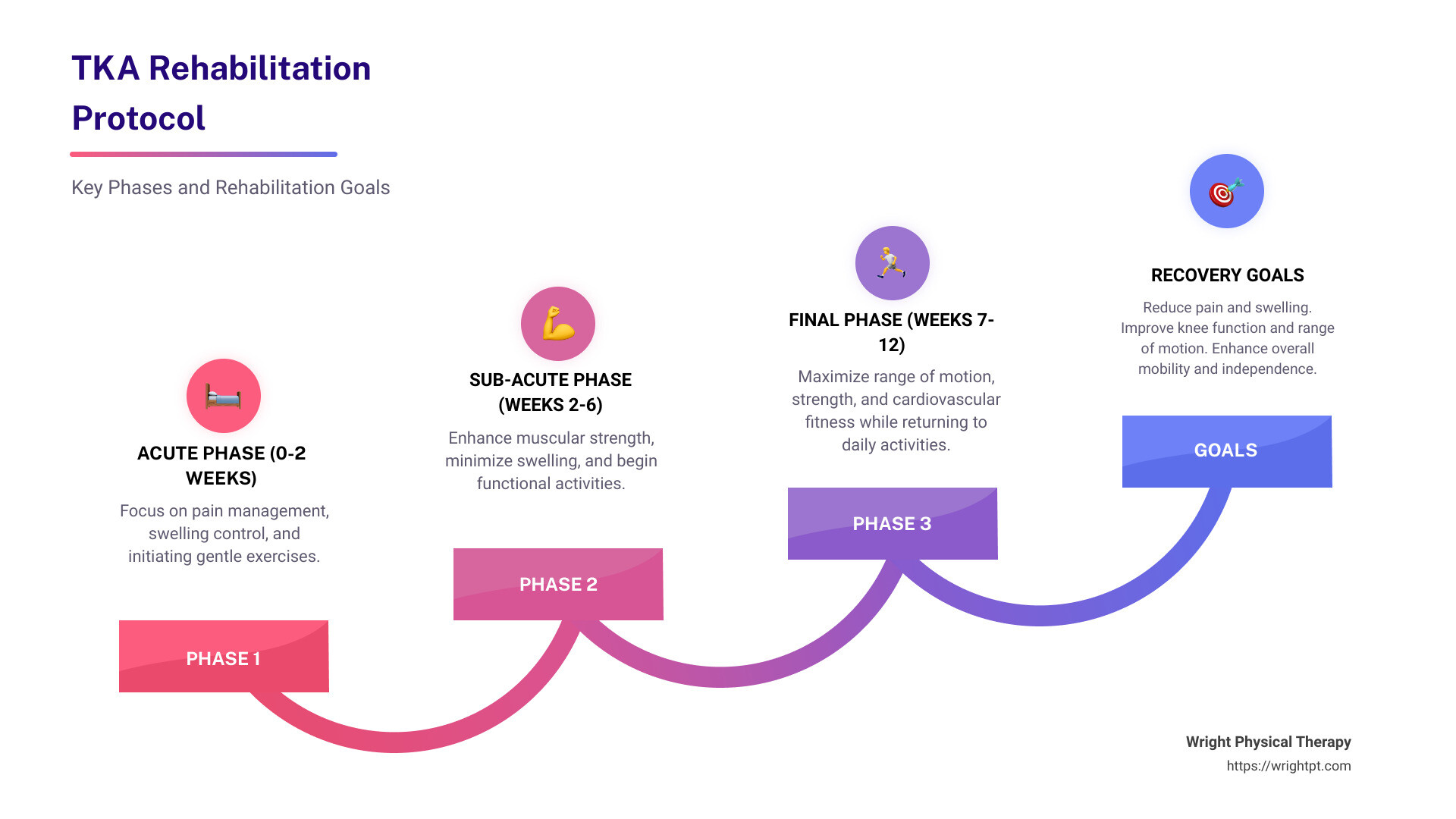
- Acute Phase (0-2 weeks): Focus on pain management, swelling control, and initiating gentle exercises.
- Sub-Acute Phase (Weeks 2-6): Enhance muscular strength, minimize swelling, and begin functional activities.
- Final Phase (Weeks 7-12): Maximize range of motion, strength, and cardiovascular fitness while returning to daily activities.
Recovery Goals:
– Reduce pain and swelling.
– Improve knee function and range of motion.
– Enhance overall mobility and independence.
At Wright Physical Therapy, we specialize in personalized and evidence-based rehabilitation protocols to help patients regain their strength and return to their daily activities.
I’m Bryan Wright, with years of experience in physical therapy, specializing in post-surgical rehab protocols like TKA. My objective is to inspire others to live joyfully and pain-free through expert treatment and care.
Acute Phase (0-2 weeks)
Day 1 until Hospital Discharge
Goals:
- Achieve active quadriceps muscle contraction.
- Ensure sufficient quadriceps control for safe, independent walking.
- Attain passive knee extension to 0 degrees.
- Reach knee flexion to 90 degrees or more.
- Control swelling.
Weight Bearing:
From day 1, weight bearing as tolerated is encouraged. Patients will use a walker or two crutches to assist with mobility.
Elevation and Cryo-Therapy:
To manage swelling and pain, elevate the leg and apply cryo-therapy (cold packs) for 20 minutes every hour.
Incision Care:
The incision is covered with an Aquacel bandage, which allows patients to shower normally. This bandage helps keep the wound clean and reduces the risk of infection.
Gait Training:
Patients will practice safe walking for about 50 feet and learn how to navigate transfers and stairs before leaving the hospital.
Home Exercises:
- Ankle Pumps with Leg Elevation: Helps with blood circulation and reduces swelling.
- Quad Sets: Tighten the thigh muscles to improve knee stability.
- Knee Extension with Overpressure: Use your own strength to gently extend the knee.
- Heel Slides: Gentle knee flexion stretches to improve mobility.
Days 3 to 14
Outpatient Physical Therapy:
Begin outpatient physical therapy around day 3 post-op. This includes supervised exercises and monitoring of progress.
Bandage Change and Staple Removal:
Change the Aquacel bandage at 1 week post-op unless there’s excessive drainage. Staples are removed at 14 days post-op, after which normal showering can resume without a bandage. Avoid submersion until cleared by the surgeon, typically around 4 weeks post-op.
Gait Training:
Continue practicing walking with the appropriate assistive device. The goal is to wean off the walker or crutches as soon as it’s safe to do so without limping.
Home Exercise Program (HEP):
Continue with the home exercises listed previously, and add new ones as instructed by your physical therapist.
Additional Exercises:
- Stretch Hamstrings and Gastroc-Soleus: Helps with overall leg flexibility.
- Active Assistive Range of Motion Knee Flexion: Wall slides or seated knee flexion exercises.
- Active Terminal Knee Extension with Bolster: Strengthens the knee.
- Straight Leg Raises: Flexion, extension, and abduction to build muscle strength.
- AROM (Active Range of Motion) Knee Extension and Flexion Exercises: Improve knee mobility.
- Terminal Knee Extension: Use equipment like Biodex or Theraband.
- Mini Squats to ¼ Depth: Strengthen the quadriceps and improve balance.
- Gait and Balance: Exercises to enhance stability and coordination.
By following this TKA protocol, you can expect a smoother recovery, improved knee function, and a quicker return to daily activities.
Next, we’ll discuss the Sub-Acute Phase (Weeks 2-6) and the steps to further enhance your recovery.
Sub-Acute Phase (Weeks 2-6)
Weeks 2-4
During weeks 2 to 4, the focus shifts to enhancing strength, mobility, and reducing swelling. The goals include achieving full range of motion (0-120 degrees), improving muscle strength and endurance, and minimizing inflammation.
Cryo-therapy, Compression, and Elevation: Continue using cryo-therapy to manage pain and swelling. Compression garments and elevating the leg can help control edema.
Gait Training: Gradually wean off assistive devices like crutches or walkers as you gain strength and balance. Safe, independent walking without a limp is the target.
Exercises:
– Bicycle for Range of Motion: Start with gentle cycling to improve knee mobility. Progress as tolerated.
– Step Ups (Forward and Lateral): Strengthen the legs and improve coordination.
– Wall Squats (45 Degrees): Build quadriceps strength. Progress to deeper squats as tolerated.
– Seated Leg Press Machine: Enhance lower body strength.
– Balance and Proprioception Exercises: Activities like standing on one leg or using a balance board can improve stability.
Weeks 4-6
In weeks 4 to 6, the aim is to progress exercises and prepare for a return to daily activities (ADLs).
Exercise Progression:
– Nautilus Equipment: Incorporate resisted knee extension and hamstring curls.
– ADLs: Gradually return to daily activities with caution, ensuring not to overdo it.
– Pool Program: If available, water exercises can be very beneficial. The buoyancy of water reduces stress on the knee while allowing for a full range of motion.
Goals: Continue progressing towards achieving greater range of motion, strength, and functional activity performance.
By the end of this phase, you should notice significant improvements in knee function, strength, and overall mobility. Next, we’ll cover the Final Phase (Weeks 7-12) to continue enhancing your recovery.
Final Phase (Weeks 7-12)
Exercises
Goals: The main goals in this final phase of the TKA protocol are to further improve range of motion, maximize strength, enhance proprioception, boost endurance, and ensure cardiovascular fitness. This phase is all about getting back to your daily and recreational activities safely and confidently.
Range of Motion: Aim for a range of motion of 0-120 degrees or more. Continue with exercises that stretch and flex the knee, ensuring it moves smoothly and without pain.
Strength: Focus on building muscle strength around the knee. Use resistance training and exercises that challenge your muscles progressively. This helps in maintaining stability and preventing future injuries.
Proprioception: Proprioception is your body’s ability to sense movement and position. Balance exercises are key here. They help improve coordination and prevent falls.
Endurance: Cardiovascular fitness is crucial. Walking programs are excellent for this. Start with short walks and gradually increase the distance as your strength and stamina improve.
Functional Activities: Practice movements that mimic your daily activities. This includes getting in and out of chairs, climbing stairs, and any specific tasks you need to return to work or hobbies.
Walking Program
A structured walking program is vital. Begin with short, manageable distances and slowly increase your walking time. Make sure to walk on even surfaces and wear supportive shoes.
Pool Program
If you have access to a pool, water exercises can be incredibly beneficial. The water’s buoyancy reduces stress on your knee while allowing you to perform a full range of motion exercises. It’s a great way to build strength and endurance without putting too much pressure on the joint.
Gym Program
Continue with the gym exercises introduced in earlier phases. Use equipment like the leg press and Nautilus machines to perform resisted knee extensions and hamstring curls. Always progress at a pace that feels comfortable and safe.
Recreation and Sporting Activities
Gradually return to your favorite activities as you gain more strength and confidence. Always follow your doctor’s clearance and avoid high-impact activities like running until you’re fully healed.
Home Exercise Program (HEP)
Once you achieve acceptable levels of range of motion, strength, gait, balance, and endurance, you can transition to a home exercise program. This program will help you maintain the progress you’ve made and keep your knee healthy.
By the end of this phase, you should be well on your way to returning to your normal activities with improved knee function and strength. Next, we will wrap up with the final thoughts and how Wright Physical Therapy supports you throughout this journey.
Conclusion
At Wright Physical Therapy, we are dedicated to providing personalized care that ensures each patient achieves the best possible outcomes from their total knee arthroplasty (TKA) rehabilitation. Our tailored approach means that we consider your unique needs and recovery goals at every step of the process.
Personalized Care
Our experienced therapists develop individualized plans that focus on your specific recovery timeline. Whether it’s adjusting exercises to suit your progress or providing one-on-one therapy sessions, we are committed to maximizing your recovery.
Community Impact
We believe in giving back to the community that supports us. That’s why a portion of our revenue goes to organizations dedicated to protecting and empowering children. This commitment extends beyond our clinic walls, enriching our practice and strengthening community bonds.
Patient Education
Empowering our patients through education is a cornerstone of our approach. We ensure you understand your treatment plan and the reasons behind each specific therapy or exercise. This knowledge helps you manage your health and prevent future issues. Our post-surgical rehabilitation services are designed to provide you with comprehensive support and resources throughout your recovery journey.
By choosing Wright Physical Therapy, you are not just receiving top-notch medical care. You are joining a community that values your well-being and is dedicated to helping you achieve a smooth and successful recovery. Together, we can move towards a healthier future.