

Looking to understand internal pelvic floor physical therapy?
This specific type of physical therapy has gained traction for addressing pelvic health conditions effectively.
To get you started quickly:
– What: Internal pelvic floor physical therapy involves the internal assessment and treatment of pelvic floor muscles.
– Who: It benefits individuals experiencing urinary incontinence, painful intercourse, prolapse, constipation, and more.
– Why: This therapy examines muscle tightness, weakness, and overall functionality to offer targeted relief.
Internal pelvic floor physical therapy is a specialized form of physical therapy focused on the pelvic floor muscles. These muscles support essential bodily functions, including bowel and bladder control, and impact both sexual and pelvic pain conditions.
As Bryan Wright, an expert in high-skilled physical therapy treatment, I’ll guide you through the essentials of internal pelvic floor physical therapy. This method not only alleviates discomfort but also promotes long-term pelvic health.
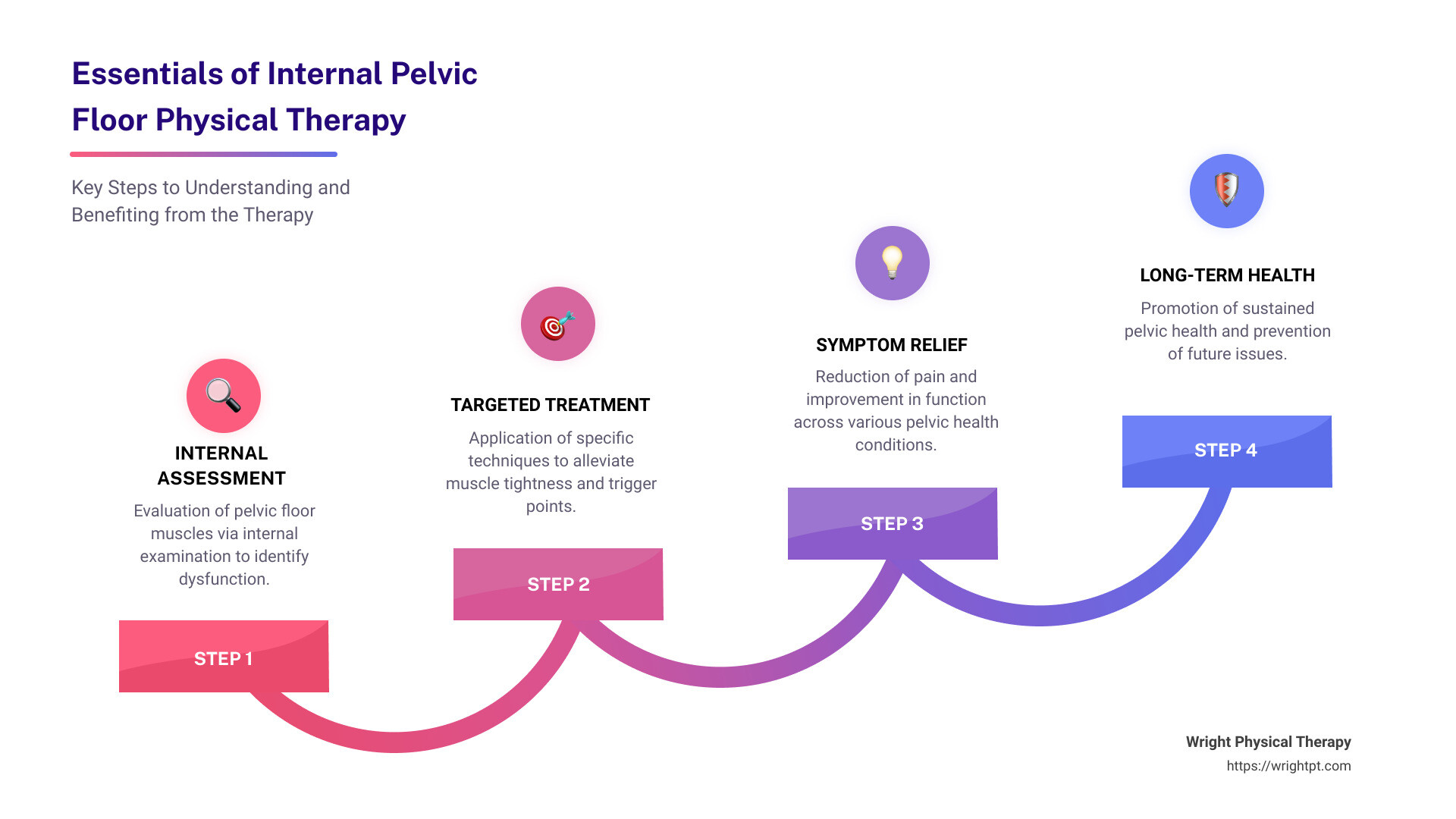
Let’s dive deeper into what internal pelvic floor therapy entails.
What is Internal Pelvic Floor Therapy?
Internal pelvic floor therapy is a specialized treatment aimed at assessing and treating the internal pelvic floor muscles. These muscles play a crucial role in supporting your bladder, bowel, and sexual function. Understanding and addressing issues in these muscles can significantly improve your quality of life.
Importance of Internal Assessments
Internal assessments are essential for identifying muscle tightness, trigger points, and other dysfunctions in the pelvic floor. These issues can cause pain not just in the pelvic area but also in the lower back, legs, and abdomen.
Why is this important?
- Pain Relief: Releasing tight muscles and trigger points can alleviate pain.
- Core Activation: Relaxed pelvic muscles improve core muscle activation and overall function.
For instance, if you have pain during sexual intercourse or symptoms similar to a urinary tract infection (UTI) but your tests are negative, an internal assessment could reveal tight or irritated muscles as the root cause.
Techniques Used in Internal Pelvic Floor Therapy
Several techniques are employed in internal pelvic floor therapy to treat dysfunctions effectively:
Manual Therapy: This involves hands-on techniques to manipulate and release tight muscles and trigger points. Your therapist may use a gloved finger to apply gentle pressure and stretches internally to release muscle spasms and knots.
Myofascial Release: This technique focuses on the fascia, the connective tissue surrounding the muscles. By applying sustained pressure, therapists can release tension and improve muscle flexibility.
Biofeedback: Biofeedback uses sensors to monitor your pelvic muscle contractions. This data is displayed on a screen, helping both you and your therapist understand how well your muscles are functioning and whether your exercises are effective.
Electrical Stimulation: This technique involves using electrical currents to stimulate the pelvic floor muscles. It can help reduce pain and muscle spasms, and your therapist may teach you how to use this equipment at home.
Each of these methods is tailored to your specific needs and comfort level, ensuring a comprehensive approach to your pelvic health.
By integrating these techniques, internal pelvic floor therapy aims to provide a holistic treatment plan that addresses both immediate discomfort and long-term muscle health.
Ready to learn more? Let’s explore who can benefit from internal pelvic floor therapy.
Who Can Benefit from Internal Pelvic Floor Therapy?
Common Conditions Treated
Internal pelvic floor therapy can be a game-changer for many people experiencing various pelvic health issues. Let’s dive into some of the common conditions it can treat.
Painful Intercourse
Painful intercourse, also known as dyspareunia, often results from tight pelvic floor muscles. Internal therapy can help release muscle tension and alleviate pain, making intimate moments more comfortable.
Urinary Incontinence
Urinary incontinence is the involuntary leakage of urine. It can occur during activities like coughing, sneezing, or exercising. Internal therapy helps strengthen the pelvic floor muscles, improving bladder control.
Fecal Incontinence
Fecal incontinence involves the inability to control bowel movements. Strengthening the pelvic floor can significantly improve this condition, giving you better control and confidence.
Pelvic Pain
Pelvic pain can be chronic and debilitating. It may stem from muscle tightness, trigger points, or nerve irritation. Internal therapy targets these issues to provide relief and improve daily function.
Pregnancy-Related Symptoms
Pregnancy puts immense pressure on the pelvic floor muscles. Internal therapy can help manage symptoms like urinary leakage and pelvic pain, both during and after pregnancy.
Postpartum Recovery
After childbirth, many women experience weakened pelvic floor muscles. Internal therapy aids in strengthening these muscles, helping with issues like prolapse and diastasis recti.
Prolapse
Prolapse occurs when pelvic organs shift out of place. This can happen due to pregnancy, heavy lifting, or chronic coughing. Internal therapy helps support and strengthen the pelvic floor, reducing prolapse symptoms.
Diastasis Recti
Diastasis recti is the separation of the abdominal muscles, common in pregnancy. Internal therapy, combined with core exercises, can help close this gap and restore muscle function.
Urinary Leakage
Urinary leakage is a common issue, especially postpartum. Internal therapy strengthens the pelvic floor, reducing or eliminating leakage during activities like laughing, jumping, or squatting.
Constipation
Constipation can be linked to tight pelvic floor muscles. Internal therapy helps relax these muscles, easing bowel movements and reducing discomfort.
Vulvodynia
Vulvodynia is chronic pain in the vulvar area. Internal therapy can address muscle tension and nerve irritation, providing much-needed relief.
Vaginismus
Vaginismus involves involuntary muscle spasms that make vaginal penetration painful or impossible. Internal therapy helps relax these muscles, improving comfort and sexual function.
Endometriosis
Endometriosis causes pelvic pain due to tissue growing outside the uterus. Internal therapy can help manage pain by releasing muscle tension and improving pelvic floor function.
Interstitial Cystitis
Interstitial cystitis is a chronic bladder condition causing pelvic pain and urinary frequency. Internal therapy can help by relaxing the pelvic floor muscles and reducing pain.
Low Back Pain
Low back pain can be linked to pelvic floor dysfunction. Internal therapy addresses muscle imbalances and improves core stability, reducing back pain.
Hip Pain
Hip pain can also be related to pelvic floor issues. Internal therapy helps by aligning the pelvis and strengthening surrounding muscles.
Tailbone Pain
Tailbone pain, or coccydynia, can result from muscle tightness or injury. Internal therapy targets these muscles, providing pain relief and improving mobility.
Pelvic Girdle Pain
Pelvic girdle pain affects the joints and muscles around the pelvis. Internal therapy helps by stabilizing the pelvic floor and reducing discomfort.
Perimenopausal Concerns
Perimenopause can bring hormonal changes that affect the pelvic floor. Internal therapy helps manage symptoms like urinary incontinence and pelvic pain during this transitional period.
Ready to take the first step towards better pelvic health? In the next section, we’ll guide you through what to expect during your first session of internal pelvic floor therapy.
What to Expect During Your First Session
Internal Examination Process
Your first session of internal pelvic floor therapy will start with an initial consultation. This is where your therapist will take a detailed history of your symptoms. Expect questions like:
- When did your symptoms start?
- What makes them better or worse?
- How do they affect your daily activities like urination, bowel movements, and sex?
This helps the therapist understand your condition and decide what areas need to be examined.
Next, you will move on to the physical examination. If an internal examination is needed, your therapist will explain the process and ask for your consent. You are always in control and can stop the exam at any time.
The internal examination is done in a private room. You will be asked to undress from the waist down, but you will be covered with a sheet. The therapist will use a gloved finger and lubricant to gently assess your pelvic floor muscles. They will check for muscle tightness, tenderness, and overall function. Your comfort is a top priority, and you will be encouraged to give feedback throughout the process.
External Examination Components
In addition to the internal examination, the therapist will also conduct an external examination. This includes:
- Posture Assessment: Evaluating how you stand and sit to identify any imbalances.
- Movement Patterns: Observing how you move, such as bending, squatting, and walking.
- Joint Evaluation: Checking the hips, lower back, and pelvis for any issues.
- Muscle Palpation: Feeling the muscles of the abdomen, inner thighs, pelvis, buttocks, and lower back to find any restrictions or imbalances.
After these examinations, your therapist will discuss their findings with you. Together, you’ll create a treatment plan tailored to your needs. This plan may include manual therapy, exercises, and lifestyle modifications.
With this understanding of what to expect, you’re well-prepared for your first session of internal pelvic floor therapy. Next, we’ll explore the different techniques and exercises used in this therapy.
Techniques and Exercises in Internal Pelvic Floor Therapy
Internal pelvic floor therapy involves various techniques and exercises designed to improve pelvic health. Let’s dive into some key methods used in this therapy:
Trigger Point Therapy
Trigger point therapy targets specific spots in your pelvic muscles known as trigger points. These are tight areas that can cause pain and discomfort.
- Pressure Application: A therapist applies gentle pressure to these points, either internally or externally, to help release the muscle tension.
- Pain Relief: This technique can relieve pain not only in the pelvic area but also in the lower back, legs, and abdomen.
- Muscle Relaxation: By releasing these trigger points, muscles become more relaxed, improving overall pelvic function.
Kegels
Kegel exercises are a well-known method for strengthening pelvic floor muscles.
- Muscle Strengthening: By contracting and relaxing the pelvic floor muscles, Kegels help build strength.
- Pain Relief: Stronger muscles can alleviate pain during activities like sex and reduce discomfort.
- Incontinence Control: Regular Kegels can help manage urinary and fecal incontinence, providing better control over bladder and bowel functions.
Electrical Stimulation
Electrical stimulation uses small electrical currents to stimulate pelvic floor muscles.
- Pain Reduction: It helps reduce pelvic pain by calming muscle spasms.
- Muscle Spasm Relief: The gentle electrical currents can relax spasming muscles, providing relief.
- Home Equipment: Therapists can teach you how to use special equipment at home for ongoing therapy.
Biofeedback
Biofeedback is a technique that uses electronic monitoring to help you understand and control your pelvic floor muscles.
- Muscle Contraction Monitoring: Devices measure how well you contract and relax your pelvic muscles.
- Exercise Improvement: The feedback helps you see your progress and adjust your exercises for better results.
- Internal Probe: Sometimes, an internal probe is used to provide more accurate readings, displayed on a computer screen for real-time feedback.
By combining these techniques, internal pelvic floor therapy aims to improve muscle function, reduce pain, and enhance overall pelvic health.
Next, we’ll address some frequently asked questions about internal pelvic floor physical therapy.
Frequently Asked Questions about Internal Pelvic Floor Physical Therapy
Can I go to pelvic floor physical therapy if I am on my period?
Yes, you can! Your menstrual cycle can actually provide valuable insights for your pelvic floor therapist. Having your period might help them identify areas of tension or tightness that aren’t as noticeable at other times. However, if you feel uncomfortable with an internal assessment during your period, that’s perfectly okay. Your therapist can focus on other areas such as your back, hips, and core, which might also be contributing to your symptoms.
Do I need to have an internal examination?
No, you don’t have to if you’re not comfortable. Internal examinations are useful because they allow therapists to directly assess the pelvic floor muscles and identify issues like tightness or trigger points. But your comfort and consent are the top priority. If you prefer to skip the internal exam, your therapist can still perform a comprehensive assessment using external techniques. They’ll work with you to create a treatment plan that fits your needs and comfort level.
Is pelvic floor physical therapy covered by insurance?
Sometimes, but it can be complicated. Many pelvic floor physical therapists choose not to contract with insurance companies due to restrictions that limit the time and scope of treatment. Traditional physical therapists often see multiple patients at once and get only about 15 minutes of one-on-one time with each. Pelvic floor therapy, however, requires longer, more focused sessions.
Insurance companies usually prefer therapists to treat just the pelvic floor, but symptoms can often stem from other areas like the hips, back, or even feet. Finding the root cause is crucial for effective treatment, and this comprehensive approach is often not covered by insurance. Because of these complexities, many pelvic floor PTs opt to be out-of-network.
For more details on out-of-network physical therapy, you can click here.
Conclusion
At Wright Physical Therapy, we are committed to helping you achieve optimal health through personalized care and expert treatment. Our approach to internal pelvic floor physical therapy is designed to get to the root of your pain and discomfort, ensuring long-lasting relief and improved quality of life.
Personalized Care
Every patient is unique, and so are their needs. That’s why we take the time to understand your specific symptoms, history, and goals. Our therapists are highly skilled and continuously update their training to provide the most effective treatments available. From your initial consultation to your ongoing treatment sessions, you will receive one-on-one attention and a customized plan tailored to your needs.
Patient Education
We believe that knowledge is power. Understanding your condition and the reasons behind each therapy or exercise can significantly impact your recovery. Our therapists will thoroughly explain your treatment plan and provide resources to help you manage your health even outside the clinic. This empowerment through education ensures that you can maintain your progress and prevent future issues.
Community Impact
We are not just focused on individual health but also on the well-being of our community. Wright Physical Therapy actively participates in local events and supports charitable initiatives. A portion of our revenue goes to organizations dedicated to protecting and empowering children. This dual focus on health and community enriches our practice and strengthens our bonds with the communities we serve.
By choosing Wright Physical Therapy, you are not only investing in your health but also contributing to a broader social mission. We invite you to join our family and experience a path to recovery that is compassionate, comprehensive, and deeply connected to the community.
For more information on how we can help you achieve your health goals, visit our Pelvic Floor Therapy page.
Together, let’s move towards a healthier future.