
Understanding Your Knee Injury Treatment Options
When dealing with knee injury treatment, quick action and proper care are essential for optimal recovery. Here’s what you need to know right away:
Immediate Knee Injury Treatment Steps:
- RICE Protocol (first 48-72 hours)
- Rest the knee and avoid weight-bearing
- Ice for 15-20 minutes every 2 hours
- Compression with a bandage (not too tight)
- Elevation above heart level
- Take appropriate pain medication (acetaminophen or NSAIDs as directed)
- Seek professional evaluation if you experience severe pain, inability to bear weight, obvious deformity, or heard a “pop”
The knee is the largest joint in your body and one of the most easily injured. Whether you’ve twisted your knee during a morning jog, felt a sharp pain while playing basketball, or simply noticed discomfort after a day of activity, understanding your treatment options is crucial for proper healing.
Knee injuries can range from minor sprains to complex tears requiring surgical intervention. The right treatment approach depends on the specific structures involved, the severity of the injury, and your individual health factors.
At Wright Physical Therapy, we believe that effective knee injury treatment begins with an accurate diagnosis and a personalized care plan. Most knee injuries can be successfully treated with conservative measures, while some may require more advanced interventions.
This guide will walk you through the essential steps of knee injury treatment, from immediate care to long-term rehabilitation strategies, helping you make informed decisions about your recovery journey.
Understanding Knee Injuries & First-72-Hours Care

Your knee is an engineering marvel – a complex hinge joint where your femur (thigh bone) meets your tibia and fibula (shin bones), with your patella (kneecap) gliding along the front. It’s no wonder that when something goes wrong, it can really throw off your daily life.
Think of your knee as a well-orchestrated team: ligaments providing stability, menisci cushioning impact, tendons connecting muscles to bones, bursae reducing friction, and articular cartilage allowing smooth movement. When any team member gets injured, the whole system feels it.
Common Knee Injuries
That sudden twist during your weekend soccer game? It might have damaged your Anterior Cruciate Ligament (ACL). These tears are particularly common in athletes who make quick direction changes or land awkwardly. What makes ACL injuries tricky is that about half occur alongside damage to other knee structures – it’s rarely just one isolated problem.
If you’ve been in a car accident where your knee hit the dashboard, your Posterior Cruciate Ligament (PCL) might be the casualty. The silver lining? PCL tears tend to be partial and often heal without surgery, unlike their ACL counterparts.
Got hit from the side during your basketball game? Your Medial or Lateral Collateral Ligaments (MCL/LCL) might be suffering. These sprains are especially common in contact sports where side impacts happen frequently.
That painful twist while getting up from your chair could be a meniscus tear. These C-shaped cartilage cushions are vulnerable both to sudden twisting and to gradual wear and tear as we age – making them equal opportunity troublemakers for young athletes and active seniors alike.
Frequent jumpers, take note: that nagging pain below your kneecap might be Patellar Tendinitis (aptly nicknamed “Jumper’s Knee”), an overuse injury affecting the tendon connecting your kneecap to your shinbone.
Warning Signs of a Knee Injury
Your body sends clear distress signals when your knee is seriously injured. Don’t ignore these red flags:
A distinct popping sound during the injury, severe pain that makes walking impossible, rapid swelling within hours, visible deformity, or an inability to fully straighten or bend your knee all warrant immediate medical attention. These aren’t symptoms to tough out or sleep on.
First 72 Hours: The Critical Window
The first three days after injuring your knee can make or break your recovery. While you may be familiar with the classic RICE protocol, modern research has evolved this into the more comprehensive PEACE & LOVE approach:
During the first days (PEACE), focus on Protecting the injured area, Elevating to reduce swelling, Avoiding anti-inflammatory treatments (which can actually interfere with natural healing), applying gentle Compression for comfort, and seeking Education about your specific condition.
In the days that follow (LOVE), gradually introduce pain-free Loading movements, maintain Optimism about recovery, promote Vascularization through gentle cardiovascular activity, and begin appropriate Exercises to restore mobility, strength and balance.
“Your body has amazing natural healing abilities,” explains Bryan Wright, DPT, founder of Wright Physical Therapy. “Our job is to create the optimal environment for those processes to work while preventing further damage.”
Diagnosing a Knee Injury
Pinpointing exactly what’s happening inside your knee is essential for proper knee injury treatment. It’s like solving a mystery where the clues come from multiple sources.
Clinical Examination
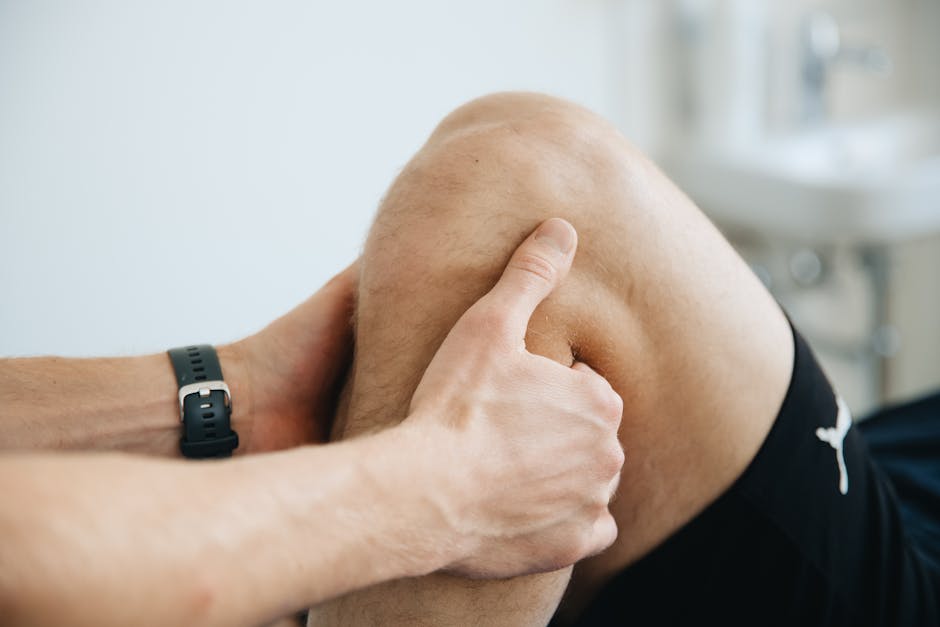
When you visit us at Wright Physical Therapy, we’ll start with a thorough conversation about how your injury occurred, followed by a hands-on examination. We’ll visually inspect for swelling or bruising, carefully feel for tender spots, assess your range of motion, and perform special tests like the Lachman test (for ACL injuries) or McMurray’s test (for meniscus tears).
This detective work helps us understand not just what hurts, but why it hurts – the first step toward targeted treatment.
Imaging Studies
Sometimes we need to look beneath the surface. Depending on your specific situation, we might recommend:
X-rays to check bone alignment and rule out fractures, MRI scans to create detailed images of soft tissues (particularly valuable for seeing ligament and cartilage damage), ultrasound for real-time visualization during certain procedures, or occasionally CT scans for complex bone issues.
“MRI technology has revolutionized knee injury diagnosis,” notes Dr. Wright. “It lets us see what’s happening with incredible detail before making any treatment decisions.”
In some cases, diagnostic arthroscopy might be needed – a minimally invasive procedure where a tiny camera is inserted into the joint for direct visualization. For more information on the effectiveness of different diagnostic imaging techniques for knee injuries, see this scientific research article.
Knee Injury Treatment vs Self-Care Timing
Knowing when to treat yourself at home versus when to seek professional help can save you time, money, and potentially prevent further damage.
When Self-Care Is Appropriate
For minor knee troubles – where pain is manageable, swelling is minimal, you can walk normally, and your knee moves relatively well – home care is often sufficient. Follow the PEACE & LOVE protocol for those crucial first days, then gradually return to your normal activities as comfort allows.
When to Seek Professional Care
Your body often tells you when professional help is needed. If you heard a pop during injury, have significant swelling, can’t bear weight normally, feel instability or catching sensations, or if pain persists despite your best home-care efforts, it’s time to call us.
“Many patients tell me they wish they’d come in sooner,” shares Dr. Wright. “Early intervention often means faster recovery and less complicated treatment.”
Emergency Signs
Some situations can’t wait for a scheduled appointment. Head to the emergency room if your knee appears visibly deformed, there’s an open wound, you’re in severe pain with complete inability to move, the injury resulted from major trauma, or you notice signs of a possible blood clot (like calf pain, swelling and warmth).
Not sure if your situation is urgent? Wright Physical Therapy offers telehealth triage for our Idaho and Utah patients who need quick guidance on next steps. Sometimes a brief video consultation can help determine whether you need immediate care or can safely wait for an in-office evaluation.
With knee injuries, timely care isn’t just about relieving pain – it’s about creating the foundation for complete recovery and preventing long-term issues. Learn more about what causes knee pain and available treatments on our dedicated resource page.
Comprehensive Knee Injury Treatment Options
After you’ve gotten a proper diagnosis for your knee injury, it’s time to map out your path to recovery. We typically start with the gentlest approaches before considering more invasive options. Think of it as climbing a ladder – we want to use the lowest rung that gets the job done.
Nonsurgical Knee Injury Treatment Essentials
Good news – many knee injuries heal beautifully without surgery. Let’s explore your conservative treatment options.
The PRICE method has evolved from the traditional RICE protocol by adding an important first step: Protection. Using crutches, a brace, or other supports prevents further damage while healing begins. The rest of the protocol remains familiar – Rest (though we rarely recommend complete immobilization these days), Ice for 15-20 minutes several times daily during the first few days, Compression for comfort and support, and Elevation to help reduce swelling.
As the Mayo Clinic wisely cautions, “Ice should not be used for longer than 20 minutes per session to avoid nerve and skin damage.” We’ve seen patients get a bit too enthusiastic with their ice packs!
For pain management, you have several medication options. Over-the-counter relief can come from acetaminophen (Tylenol) for pain or NSAIDs like ibuprofen and naproxen that tackle both pain and inflammation. For more severe cases, your doctor might prescribe stronger NSAIDs or, rarely, short-term opioids. The NHS offers a practical tip: “Take regular paracetamol and ibuprofen together, following packet instructions” for optimal relief.
Bracing can be a game-changer during recovery. Hinged knee braces allow safe movement while preventing harmful motions. Compression sleeves provide gentle support and improve positional awareness. If you’re dealing with arthritis, unloading braces cleverly shift weight away from damaged areas. Athletes with patellar issues often benefit from simple patellar straps. At Wright Physical Therapy, we’ll help ensure your brace fits perfectly – an ill-fitting brace is about as useful as an umbrella with holes!
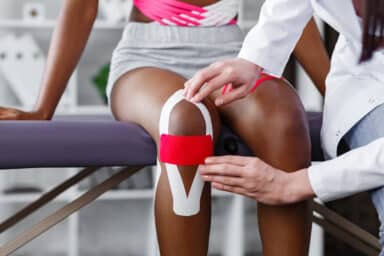
Physical therapy truly shines as the cornerstone of knee injury treatment. Our approach includes hands-on manual therapy techniques to improve mobility and address muscle tension. We’ll guide you through personalized therapeutic exercises that progressively build strength, balance, and functional movement patterns. When helpful, we might incorporate modalities like electrical stimulation or ultrasound, and taping techniques for additional support.
For persistent pain, advanced injection therapies might be considered. Corticosteroid injections provide powerful but temporary anti-inflammatory effects. Hyaluronic acid injections lubricate the joint, and as Mayo Clinic research notes, “Although study results on hyaluronic acid injections are mixed, relief may last as long as six months.” Newer options like Platelet-Rich Plasma (PRP) harness your body’s own healing factors, while stem cell therapy remains an experimental but promising frontier. For more information on the effectiveness of PRP for knee injuries, see this scientific research study.
Surgical Knee Injury Treatment Pathways
When conservative approaches aren’t enough, surgical options come into play. The specific procedure depends entirely on what’s damaged and how severely.
Arthroscopic procedures use tiny incisions and a camera, allowing surgeons to see and treat problems with minimal disruption. These minimally invasive approaches include meniscectomy (removing damaged meniscus portions), meniscus repair (stitching tears when possible), chondroplasty (smoothing damaged cartilage), and removal of inflamed tissue or loose fragments.
For torn ligaments that won’t heal on their own (particularly the ACL), reconstruction becomes necessary. As the American Academy of Orthopaedic Surgeons notes, “The anterior cruciate ligament (ACL) is often injured during sports activities, especially in athletes who participate in cutting and pivoting sports like soccer, football, and basketball.” During reconstruction, surgeons create a new ligament using a graft, often taken from your own patellar tendon or hamstring.
More advanced joint issues might require preservation or replacement procedures. Osteotomy realigns bones to shift weight away from damaged areas. Partial knee replacement replaces only the damaged portion, while total knee replacement substitutes the entire joint with artificial components. Cartilage restoration procedures like OATS or ACI aim to regenerate healthy cartilage. Many of these procedures now benefit from robot-assisted techniques for improved precision.
Rehab & Return-to-Play Timeline
Whether your treatment is surgical or nonsurgical, rehabilitation is absolutely essential. The timeline varies based on your specific situation, but generally follows four phases:
During the Protection Phase (first 2 weeks), we focus on controlling pain and swelling while protecting healing tissues. You’ll begin gentle range of motion exercises, isometric strengthening, and learn to walk properly with any needed assistive devices.
In the Motion and Basic Strengthening Phase (2-6 weeks), you’ll progress to more active range of motion exercises, begin weight-bearing as tolerated, and start light resistance training. Activities like stationary biking or swimming often become possible.
The Advanced Strengthening Phase (6-12 weeks) introduces progressive resistance training, functional movement patterns, and exercises specific to your sport or daily activities. Proprioceptive training helps restore your body’s position sense.
Finally, the Return to Activity Phase (12+ weeks) gradually reintroduces sport-specific drills, agility training, and for athletes, plyometrics. While “a sprained knee may take 4–12 weeks to return to normal,” more serious injuries like ACL reconstructions typically require 6-9 months before full return to sport.
It’s worth noting that acute and chronic injuries follow different rehabilitation paths:
| Aspect | Acute Injury Protocol | Chronic Injury Protocol |
|---|---|---|
| Initial Focus | Pain and swelling control | Identifying and addressing underlying causes |
| Activity Modification | Significant rest period | Modified activity with gradual progression |
| Exercise Intensity | Gentle, pain-free movements | Progressive loading to build tolerance |
| Modalities | Ice initially, then heat as appropriate | Heat often preferred |
| Timeline | Follows typical healing phases | May require longer intervention |
| Goals | Return to prior level of function | Improve function while managing symptoms |
Preventing Future Knee Injuries
The best knee injury treatment is the one you never need. Here’s how to protect your knees going forward:
Strong muscles provide crucial stability to your knee joint. Focus on strengthening your quadriceps (front thigh), hamstrings (back thigh), calves, hips (especially gluteal muscles), and core. As one expert memorably put it, “Muscle weakness is cited as the key cause in 99.9% of knee problems.” That might be a slight exaggeration, but the message holds true!
Flexibility matters just as much as strength. Regular stretching of all lower body muscles, dynamic warm-ups before activity, foam rolling, and joint mobility exercises all help reduce stress on your knees.
Improving your balance and body awareness (proprioception) helps prevent those awkward movements that often lead to injury. Practice single-leg balance exercises, train on unstable surfaces like wobble boards, work on agility drills, and learn proper landing mechanics.
Finally, make smart activity choices. Wear proper footwear specific to your activity, warm up and cool down thoroughly, increase intensity gradually, mix up your activities to avoid overuse, and give yourself adequate recovery time. As the Better Health Channel advises, “Warm up and stretch muscles properly before exercise. Use suitable footwear that provides ankle and knee support. Maintain proper technique to avoid twisting or overloading the knee.”
At Wright Physical Therapy, we love creating personalized injury prevention programs for athletes and active individuals throughout Idaho and Utah. We believe that keeping you active and injury-free is the best service we can provide. After all, the knee you save may be your own!
Learn more about knee joint rehabilitation exercises on our dedicated resource page.
Conclusion & Next Steps

You’ve made it this far on your knee recovery journey – and that’s something to celebrate! Whether you’re nursing a fresh injury or working through a long-term issue, understanding knee injury treatment options is your first step toward getting back to the activities you love.
Key Takeaways:
Remember those first crucial days after injury? The PEACE & LOVE protocol isn’t just a catchy acronym – it’s your roadmap for those critical initial hours. Protecting your knee, managing pain, and starting gentle movement at the right time can dramatically improve your healing trajectory.
Don’t ignore those warning signs. I can’t tell you how many patients come to us saying, “I wish I’d come in sooner.” Severe swelling, instability, or that unmistakable “pop” sound are your knee’s way of asking for professional help. Listen to what your body is telling you.
The healing journey isn’t a sprint – it’s more like a thoughtful hike with clearly marked milestones. Your rehabilitation program should progress at the pace that’s right for your specific injury and body. At Wright Physical Therapy, we never use cookie-cutter approaches because we know your knee is as unique as you are.
Risks of Delayed Care
I’ve seen it too many times – folks trying to “tough it out” only to create bigger problems down the road. When you delay proper knee injury treatment, your body develops compensation patterns that can affect your hips, back, and even your uninjured knee. What starts as a simple issue can snowball into chronic pain, more extensive tissue damage, and potentially the need for surgery that might have been avoided.
As one of our patients recently shared, “I thought it would just get better on its own, but six months later, I could barely climb stairs. Don’t make my mistake.”
Your Individualized Plan
Every knee has its own story. The basketball injury of a teenager needs a different approach than the arthritic knee of a gardening enthusiast. At Wright Physical Therapy, we begin with thorough detective work – figuring out not just what hurts, but why it hurts and what factors in your daily life might be contributing.
Our therapists combine hands-on techniques with targeted exercises, always adjusting your program based on your progress and feedback. We believe in empowering you with knowledge about your own body. You’ll leave our care understanding not just how to heal your current issue, but how to protect your knees for years to come.

With locations throughout Idaho and Utah – from the busy streets of Boise to the mountain views of Logan – we’re never far from where you need us. Our team brings the same blend of expertise and compassion to every community we serve.
Life’s too short to let knee pain slow you down. Whether you dream of summiting that hiking trail, playing with your grandkids without wincing, or simply walking through the grocery store pain-free, proper knee injury treatment is your path forward.
Reach out to Wright Physical Therapy today. Let’s write the next chapter of your knee health story together – one where pain doesn’t get to be the main character anymore.