
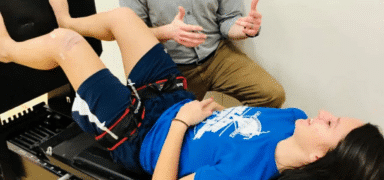
Why Knee Strength Matters for Joint Health
Knee strengthening exercises help reduce pain, improve stability, and prevent future injuries by building the muscles that support your knee joint. If you’re looking for effective ways to strengthen your knees, here’s a quick guide:
| Exercise Type | Examples | Benefits |
|---|---|---|
| Quad Strengthening | Straight-leg raises, Wall sits | Supports kneecap tracking, reduces pressure |
| Hamstring Work | Hamstring curls, Bridges | Provides posterior knee support, balances muscles |
| Hip/Glute Training | Clam shells, Glute bridges | Improves alignment, reduces lateral knee stress |
| Calf Exercises | Heel raises, Step-downs | Improves stability, assists with shock absorption |
| Balance Training | Single-leg stands, Step-ups | Improves proprioception, prevents falls |
The knee joint is one of the most commonly injured areas of the body. Whether you’re recovering from surgery, managing arthritis pain, or simply wanting to prevent future problems, strengthening the muscles around your knees is crucial.
Many people make the mistake of resting completely when knee pain occurs. But according to the Arthritis Foundation, exercise may actually be the most effective way to treat osteoarthritis without medication.
Strong, flexible muscles protect your knees by:
- Absorbing shock during movement
- Distributing forces evenly across the joint
- Maintaining proper alignment
- Supporting daily activities like climbing stairs
Instead of avoiding activity, a well-structured strengthening program can be your path to better knee health and function.
As Dr. Waskowitz, an orthopedic surgeon, explains: “Think of knee strengthening as playing offense rather than defense—we’re not just treating injuries, we’re preventing them.”
Explore more about knee strengthening exercises:
The Science Behind Strong Knees
Let’s take a quick journey through knee anatomy to understand why knee strengthening exercises are so powerful. Your knee isn’t just a simple hinge—it’s supported by an amazing team of muscles working together to keep you moving smoothly.
Think of your knee muscles like a dedicated support crew. In the front, your quadriceps act as the powerhouse, extending your knee and keeping your kneecap tracking properly. Behind them, your hamstrings provide the counter-balance, preventing your lower leg from sliding forward while helping you bend your knee. Your gluteal muscles (yes, your buttocks!) play a crucial role too, stabilizing your pelvis and keeping your knees aligned properly during movement. And don’t forget your calves, which help with stability and cushion impact when you walk or run.
When this muscle team works in harmony, they spread forces evenly across your knee joint. But when one player is weaker than the others, your knee can start to complain—often loudly!
Here at Wright Physical Therapy, we see this pattern daily in our Idaho clinics. Many patients are surprised to learn their knee pain isn’t from damaged joints but from muscle imbalances that can be corrected.
Why Strengthen the Knee Muscles?
Did you know knee pain affects about one in four adults? That’s a lot of achy knees! The good news is that strengthening the muscles around your knee doesn’t just mask symptoms—it addresses underlying causes.
Research consistently shows the benefits are impressive:
Your muscles act like natural shock absorbers, taking pressure off painful joint surfaces when they’re strong. They’re also your knee’s personal bodyguards, controlling movement and preventing wobbling. Strong muscles distribute weight more evenly across your joint surfaces, protecting your precious cartilage. And if you’re concerned about arthritis, regular exercise helps maintain joint space and function.
As one specialist from the Hospital for Special Surgery puts it: “The muscles around your knee are like shock absorbers on your car—when they’re working well, you hardly notice bumps in the road.”
With over 32.5 million American adults affected by osteoarthritis, the Arthritis Foundation points to a growing body of evidence showing that exercise may be the most effective non-medication treatment available. You can dive deeper into their specific recommendations for physical activity at the Arthritis Foundation’s Health & Wellness Center. Knee strengthening exercises are at the heart of this approach.
Safe Start: Precautions & Red-Flags
Before jumping into your workout shoes, let’s talk safety first.
Some situations call for a chat with your healthcare provider before starting knee strengthening exercises:
- Recent knee injuries or surgeries
- Severe pain, swelling, or feeling unstable
- Knees that lock up or give out unexpectedly
- Existing conditions like advanced arthritis
At Wright Physical Therapy, we teach patients to use a simple pain scale to stay safe:
- 0-3: Mild discomfort that’s perfectly fine
- 4-5: Moderate discomfort—modify but continue
- 6-10: Stop! This is your knee’s way of saying “too much, too soon”
“Think of pain as a conversation with your body, not something to power through,” our therapists often remind patients. “A little muscle burn is expected, but sharp pain is a clear stop sign.”
If you’re recovering from surgery, always follow your surgeon’s timeline. Generally, we start with gentle isometric exercises (where you tighten muscles without moving the joint), then gradually progress to more dynamic movements as healing allows.
Frequency, Intensity & Equipment Essentials
Creating an effective knee program is simpler than you might think:
For frequency, aim to perform your knee strengthening exercises 2-3 times weekly, giving muscles a 48-hour recovery break between sessions. Consistency over 4-6 weeks typically yields noticeable improvements.
Start gently with just 2-3 repetitions of each exercise, gradually building to 2 sets of 10-15 reps. Hold positions initially for 3-5 seconds, working up to 10-second holds as you get stronger.
The beauty of knee strengthening is you need minimal equipment to start. A sturdy chair for balance, a small 6-inch step, and a cushion are your basics. As you progress, inexpensive resistance bands or light ankle weights (starting around 5 pounds) can add challenge.
As our Twin Falls physical therapist loves to say with a smile: “The tortoise approach wins the knee-strengthening race every time. Slow, steady progress builds strong knees that last.”
Strengthening your knees isn’t just about eliminating pain—it’s about building resilience that supports an active lifestyle for years to come.
Knee Strengthening Exercises: Step-by-Step Guide
When it comes to knee strengthening exercises, quality trumps quantity every time. I’ve seen countless patients rush through their routines only to wonder why they’re not making progress. The secret? Proper form that targets the right muscles while protecting your joints from unnecessary stress.
Before diving into any exercise, remember these golden rules: keep your back straight (no arching), align your knees over your second toe (never let them cave inward), control every movement (no jerking or bouncing), and breathe normally throughout. These simple adjustments make all the difference between an exercise that heals and one that potentially harms.
Let’s walk through exercises for every fitness level, so you can find your perfect starting point and gradually build strength.
Beginner Knee Strengthening Exercises
If you’re just starting out, recovering from surgery, or dealing with significant knee pain, these gentle yet effective exercises are your new best friends.
The Quad Set is as simple as it gets but incredibly effective. Sit with your leg extended and the back of your knee pressed into a towel. Now, tighten your thigh muscle while pushing your knee downward. Hold for 5 seconds, release, and repeat 10 times per leg. This activates your quadriceps without moving the joint—perfect for early rehabilitation.
Straight-Leg Raises build on this foundation. Lie on your back with one knee bent and foot flat. Keep the other leg straight, tighten the thigh, and lift about 12 inches off the floor. Hold briefly, lower slowly, and complete 10 repetitions before switching legs. The beauty of this exercise is how it strengthens your quads while minimizing pressure on the tender knee joint.
For gentle mobility, Heel Slides work wonders. From a lying position with legs straight, slowly bend one knee and slide your heel toward your buttocks. Hold briefly, then straighten. This smooth movement improves range of motion while gently engaging both your quadriceps and hamstrings.
When you’re ready for a bit more challenge, try Seated Knee Extensions. Sitting tall in a chair, slowly straighten one knee without lifting your thigh. Hold, lower, and repeat. This isolates quadriceps function through controlled movement.
Finally, don’t forget your glutes! Glute Bridges strengthen your buttocks and hamstrings, which directly support knee alignment. Lie on your back with knees bent and feet flat. Tighten your buttocks and lift your hips toward the ceiling, hold, then lower slowly.
At our Wright Physical Therapy clinics across Idaho, these foundational exercises help patients build a solid strength base before tackling more challenging movements.
Intermediate Progressions
Once those beginner exercises feel manageable, it’s time to level up. These intermediate options will challenge your muscles while maintaining joint safety.
Wall Squats are a controlled way to build strength in multiple muscle groups. Stand with your back against a wall, feet shoulder-width apart. Slide down until your knees bend to about 45 degrees (never beyond 90), hold for 5-10 seconds, then push through your heels to stand. Your quadriceps, hamstrings, and glutes all get a workout in this supported position.
Step-Ups mimic a movement we do every day—climbing stairs—while building functional strength. Using a small step (6-8 inches high), step up with one foot, bring the other foot up, then step down in the same order. Alternate your leading leg for balanced strengthening.
For hip and lateral knee support, Clam Shells are unbeatable. Lie on your side with knees bent at 45 degrees and feet together. Keep your feet touching while lifting just the top knee (like a clam opening). This targets those often-neglected hip abductors and external rotators that control knee alignment.
Monster Walks add resistance training to the mix. Place a resistance band around your thighs just above your knees, bend slightly, and step sideways while maintaining band tension. These side steps specifically target hip abductors and improve lateral stability—crucial for preventing knee pain.
Balance is often overlooked but essential for knee health. Single-Leg Balance exercises improve proprioception (your joint’s position sense) and stability. Simply stand on one leg near a counter for support if needed, and hold the position. As you improve, try closing your eyes or standing on an unstable surface.
“Many people are surprised to learn that knee pain often stems from weakness or inflexibility rather than structural damage,” one of our Boise physical therapists often tells patients. “These intermediate exercises address both components for comprehensive healing.”
Advanced Knee Strengthening Exercises
Ready for a serious challenge? These advanced movements will further strengthen your knees for athletic activities and demanding daily tasks.
Split Squats take single-leg strength to new heights. Stand in a staggered stance, one foot forward and one back. Bend both knees to lower your body, then push through the front heel to rise. The beauty of this exercise is how it challenges not just strength but also balance and coordination.
Lunge Clock adds directional variety to your routine. Imagine standing in the center of a clock face and lunging toward different hours (12, 3, 6, and 9 o’clock). This develops multi-directional stability—essential for sports and unexpected movements in daily life.
Single-Leg Dips require serious control. Standing on one leg with the other slightly extended forward, bend your standing knee to lower your body just 2-3 inches, then push back up. This minimal movement demands maximum stability and strength.
For those returning to athletic activities, Box Jumps develop power and neuromuscular control. Using a sturdy, low box or step, jump up and land softly with bent knees, then step back down. The explosive movement trains your muscles to respond quickly while protecting your joints.
Bulgarian Split Squats might look intimidating, but they deliver impressive results. Place your back foot on a bench behind you, then lower by bending your front knee. These target your quadriceps, hamstrings, and glutes while challenging balance—making them particularly effective after ligament injuries like ACL tears.
Flexibility & Mobility Stretches
Strengthening without stretching is like building a house without doors—functional but limited. These stretches complement your knee strengthening exercises for complete joint health.
The Standing Quadriceps Stretch targets the powerful muscles at the front of your thigh. Hold onto a support, bend one knee, and grasp your ankle. Gently pull your heel toward your buttocks, feeling the stretch along the front of your thigh.
For the back of your legs, the Hamstring Stretch is essential. Sit on a chair’s edge with one leg extended, keep your back straight, and lean forward from your hips. This lengthens those hamstrings that often tighten with knee issues.
Don’t forget your Calf Stretch—tight calves can affect knee mechanics more than you might think. Stand facing a wall with one foot back, heel down. Keep that back leg straight while bending your front knee to feel the stretch through your calf.
The Figure-4 Stretch reaches deep into the hip rotators that influence knee alignment. Lying on your back with knees bent, cross one ankle over the opposite thigh, then gently pull the uncrossed thigh toward your chest.
Finally, the Hip Flexor Stretch addresses those front hip muscles that can pull on your knee mechanics. Kneel on one knee with the other foot in front, then gently push your hips forward while keeping your back straight.
“Flexibility isn’t about touching your toes—it’s about giving your joints the freedom to move without restriction,” explains one of our Jerome physical therapists. “Tight muscles are injury-prone muscles, making stretching a non-negotiable part of knee health.”
Common Mistakes & How to Avoid Them

Even with the best intentions, certain mistakes can undermine your progress with knee strengthening exercises. Knowing these pitfalls helps you avoid them.
Knees caving inward is perhaps the most common error I see in our clinics. This increases stress on ligaments and can create tracking issues. Instead, focus on pushing your knees slightly outward, keeping them aligned with your second toe throughout movements.
Another frequent mistake is letting knees extend past your toes, which places excessive pressure on your kneecap. The fix is simple—keep your weight in your heels and think about sitting back into exercises like squats rather than pushing forward.
Many patients fall into the trap of rushing through repetitions, eager to finish their routine. This reduces muscle engagement and increases injury risk. Slow, controlled movements—especially during the lowering phase—maximize benefits while protecting your joints.
Holding your breath during exercise might seem minor, but it increases blood pressure and reduces stability. Remember to breathe normally throughout, exhaling during the most challenging part of each movement.
Perhaps most importantly, ignoring pain can transform a helpful exercise into a harmful one. There’s a crucial difference between muscle fatigue (which is expected) and joint pain (which is a warning sign). At Wright Physical Therapy in Twin Falls, we remind patients that quality always trumps quantity—if your form breaks down or pain increases, it’s time to stop or modify.
Progressing Your Program
The body adapts quickly to exercise, which is why progression is key to continued improvement with your knee strengthening exercises.
When exercises start feeling easier, don’t just do more of the same—challenge yourself differently. Add resistance with bands or weights once bodyweight exercises become comfortable. Increase time under tension by holding positions longer (5-10 seconds instead of 3). Add instability by performing exercises on foam pads or balance discs. Increase repetitions gradually, working up to 15-20 before adding resistance. And reduce support over time, progressing from using two hands for balance to one hand to no hands.
How do you know when you’re ready to progress? Look for these signs: you can complete your current exercise with proper form, you feel minimal fatigue during the prescribed repetitions, and you experience no increase in pain during or after exercise.
“Progression isn’t about rushing to the hardest version,” explains one of our Rupert physical therapists. “It’s about finding the sweet spot where you’re challenged but still maintaining perfect form.”
A simple exercise log can work wonders for tracking progress. Note the exercises performed, number of repetitions and sets, any modifications used, and your pain level (0-10) during and after. This concrete record shows improvements that might otherwise go unnoticed and keeps you motivated through plateaus.
Strengthening your knees isn’t a sprint—it’s a marathon that rewards consistency and proper technique with lasting joint health.
Conclusion & Next Steps
Your journey to healthier, stronger knees isn’t a sprint—it’s a marathon with lasting rewards. The knee strengthening exercises we’ve explored together form the foundation of better joint health, improved mobility, and a more active lifestyle.
Think of your knee strength as an investment that pays dividends daily. Each squat, step-up, and stretch contributes to joints that can carry you through life’s trips with less pain and more confidence. The most important takeaways? Focus on quality over quantity, progress at your body’s pace, and remember that consistency trumps intensity every time.
“Many of our patients are surprised by how much their knee pain improves once they build strength in the surrounding muscles,” shares one of our physical therapists at Wright Physical Therapy. “It’s like giving your knees a support team they can count on.”
Your knee health journey doesn’t have to be a solo expedition. At Wright Physical Therapy, we’ve walked alongside thousands of patients across Idaho and Utah, helping them overcome everything from post-surgical recovery to chronic arthritis pain. Our approach combines hands-on care with education that empowers you to take charge of your mobility.
If you’ve been diligently working through these exercises but still experience persistent discomfort, or if you’re unsure which movements are right for your specific situation, we’re here to help. Our team excels at creating personalized plans that address your unique needs—because knee pain isn’t one-size-fits-all, and neither is treatment.
You’ll find our friendly physical therapists ready to assist you across Idaho—from Twin Falls to Boise, Jerome to Idaho Falls—and in Logan, Utah. Each of our clinics shares the same commitment: treating not just your symptoms but the root cause of your discomfort.
For personalized guidance on your knee health journey, explore our comprehensive knee pain relief services. We combine clinical excellence with genuine care—what we like to call “compassionate competence.”
The path to stronger knees begins with a single step. Whether you’re just starting with gentle quad sets or progressing to advanced single-leg exercises, each movement brings you closer to the active lifestyle you deserve. Your knees have carried you this far—now it’s time to return the favor by giving them the strength and support they need for the journey ahead.