

Introduction
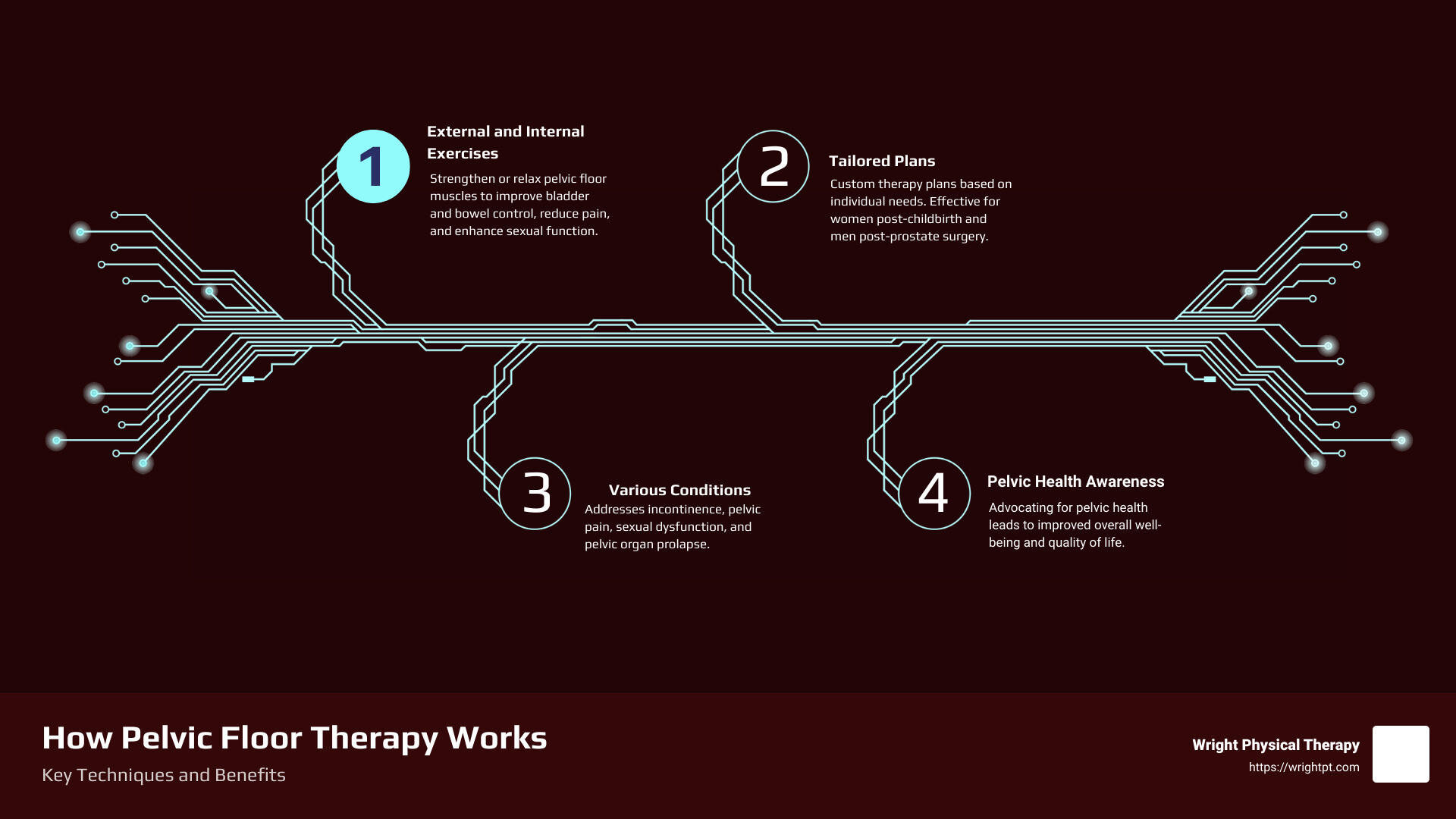
How does pelvic floor therapy work? Simply put, pelvic floor therapy involves exercises and techniques designed to strengthen or relax the muscles in your pelvic region. This therapy helps improve bladder and bowel control, reduce pain, and enhance sexual function.
Quick points:
- External and internal exercises – strengthen or relax pelvic floor muscles.
- Tailored plans – each therapy plan is customized based on individual needs.
- Addresses various conditions – including incontinence, pelvic pain, and sexual dysfunction.
The pelvic floor is a set of muscles resembling a hammock, stretching from the pubic bone to the tailbone. These muscles support your bladder, uterus (in women), prostate (in men), and rectum. They play a critical role in daily functions like urination, bowel movements, and sexual activity.
When these muscles weaken or become too tight, it can lead to a range of problems. For example, women who’ve given birth may experience urinary incontinence or pelvic organ prolapse. Men might face issues after prostate surgery. Regardless of the cause, pelvic floor therapy can make a significant difference.
Considering how essential these muscles are, it’s important to give your pelvic floor the same care and attention you’d give any other muscle in your body. As Lydia Zeller, CEO of Flyte, states, “If you are unaware that effective solutions exist, you cannot advocate for yourself.”
What is Pelvic Floor Therapy?
Pelvic floor therapy involves physical methods to strengthen and/or relax the muscles of the pelvic floor. These muscles play a crucial role in core stability, control over urination, bowel movements, and sexual function.
Definition
Pelvic floor therapy is a type of physical therapy that focuses on the muscles, ligaments, and tissues supporting the pelvic organs. These organs include the bladder, uterus, prostate, and rectum. The therapy can involve exercises, manual techniques, and sometimes biofeedback or electrical stimulation to improve muscle function.
Purpose
The primary goal of pelvic floor therapy is to restore the normal function of the pelvic floor muscles. This can involve:
- Strengthening weak muscles: This helps in conditions like urinary incontinence.
- Relaxing tight muscles: This is beneficial for issues such as pelvic pain or painful intercourse.
- Improving coordination: Enhancing muscle control can aid in better bladder and bowel management.
Pelvic floor therapy is often recommended as a first-line treatment for various forms of pelvic floor dysfunction. According to research, it is minimally invasive and highly effective, making it a preferred option before considering surgical interventions.
Benefits
The benefits of pelvic floor therapy are extensive and can significantly improve quality of life. Here are some key advantages:
- Improved bladder control: Strengthening the pelvic floor muscles can reduce or eliminate urinary incontinence. A study showed that up to 25% of adults experience urinary issues, which can be managed effectively through pelvic floor therapy.
- Enhanced sexual function: Both men and women can experience improved sexual health. For men, this might mean better erectile function, while for women, it can reduce pain during intercourse.
- Better bowel control: Strengthening these muscles can also help manage fecal incontinence.
- Reduced pelvic pain: Techniques to relax and stretch tight muscles can alleviate chronic pelvic pain.
- Postpartum recovery: Women who have given birth can benefit from pelvic floor therapy to address issues like pelvic organ prolapse or urinary incontinence.
Kelly Feddema, a physical therapist specializing in pelvic floor rehabilitation, notes, “Strengthening pelvic floor muscles can help prevent bladder leakage,” highlighting the preventive benefits of the therapy.
In summary, pelvic floor therapy offers a comprehensive approach to managing and improving pelvic health. Whether you are dealing with incontinence, pelvic pain, or other pelvic floor issues, this therapy can provide significant relief and improve your overall well-being.
How Does Pelvic Floor Therapy Work?
Pelvic floor therapy uses a variety of techniques and exercises to strengthen or relax the pelvic floor muscles. Let’s dive into some key techniques and common exercises used in this therapy.
Key Techniques in Pelvic Floor Therapy
Trigger Point Therapy
Trigger point therapy targets specific spots known as trigger points. These are sensitive areas that can cause pain and discomfort. By applying pressure to these points, either internally or externally, therapists can help release tension and reduce pain. Sometimes, anesthesia may be injected into the area to provide relief.
Kegels
Kegels are one of the most well-known exercises for the pelvic floor. They involve contracting and relaxing the pelvic floor muscles. This exercise can help with bladder control and reduce pain during sex. A physical therapist can teach you the correct way to perform Kegels to ensure you’re getting the most benefit.
Manual Therapy
Manual therapy involves hands-on techniques to relax the pelvic floor muscles. Therapists often perform this internally to relieve trigger points and muscle tension. This can be particularly helpful for those experiencing significant pelvic pain.
Biofeedback
Biofeedback uses sensors to measure the activity of your pelvic floor muscles. These sensors can be placed externally or internally. The data is displayed on a computer screen, allowing both you and your therapist to see how well you are contracting and relaxing your muscles. This feedback helps you understand and improve your technique.
Electrical Stimulation
Electrical stimulation involves using a device to send small electric currents to your pelvic floor muscles. This can help reduce pain and muscle spasms. Your therapist may perform this in the office or teach you how to use the equipment at home.
Common Exercises Used in Pelvic Floor Therapy
Pelvic Bracing
Pelvic bracing involves tightening the pelvic floor muscles and holding the contraction. This exercise can help stabilize the pelvis and improve muscle strength. It’s often used to prepare the muscles for more complex movements.
Core Strengthening
Core strengthening exercises target not just the pelvic floor but also the muscles in your back, hips, and abdomen. Strengthening these areas can provide better support for your pelvic organs and improve overall muscle coordination. Common exercises include planks and bridges.
Diaphragmatic Breathing
Diaphragmatic breathing helps engage and relax the pelvic floor muscles. By focusing on deep breaths, you can calm the nervous system and reduce muscle tension. This technique is especially useful for those dealing with pelvic pain or overactive bladder.
Bridge Exercise
Lie on your back with your knees bent and feet flat on the floor. Slowly lift your buttocks off the ground while keeping your abdominal muscles engaged. Hold this position for a few seconds, then lower yourself back down. Repeat this exercise 10 times to strengthen both your pelvic floor and core muscles.
Deep Squats
Deep squats can help strengthen the pelvic floor and improve muscle coordination. Stand with your feet shoulder-width apart and lower your body as if you’re sitting in a chair. Make sure to keep your back straight and knees aligned with your toes. Hold for a few seconds and then return to the starting position.
By incorporating these techniques and exercises into your routine, pelvic floor therapy can help improve muscle strength, reduce pain, and enhance your overall pelvic health.
Next, we’ll look at the specific conditions that can be treated with pelvic floor therapy.
Conditions Treated by Pelvic Floor Therapy
Pelvic floor therapy can be a game-changer for many health issues. Let’s dive into how it helps specific conditions.
Pelvic Floor Dysfunction and Its Impact
Pelvic floor dysfunction means your pelvic muscles can’t relax or work together properly. This can lead to symptoms like:
- Constipation: Difficulty in passing stool.
- Incontinence: Leaking urine or stool.
- Pain during sex: Discomfort or pain during intercourse.
- Erectile dysfunction: Trouble in achieving or maintaining an erection.
Causes of pelvic floor dysfunction include:
- Pelvic surgery: Operations like prostate surgery can weaken muscles.
- Aging: Muscles naturally weaken over time.
- Pregnancy: Adds stress to pelvic muscles.
- Obesity: Extra weight puts pressure on the pelvic floor.
Long-term effects can be severe if untreated. Chronic pain, ongoing incontinence, and reduced quality of life are common.
How Pelvic Floor Therapy Benefits Specific Conditions
Urinary Issues:
Pelvic floor therapy can address problems like frequent urination and leakage. Techniques like Kegel exercises help strengthen muscles to improve bladder control.
Bowel Control:
For constipation or fecal incontinence, therapy can teach you how to relax and coordinate your pelvic floor muscles. This can make bowel movements easier and reduce accidents.
Sexual Function:
Pain during sex and erectile dysfunction can be treated through pelvic floor therapy. Strengthening and relaxing pelvic muscles can improve sexual function and reduce pain.
Postpartum Recovery:
Childbirth can weaken pelvic muscles. Pelvic floor therapy helps new mothers regain strength and control, reducing issues like incontinence and pelvic pain.
Pelvic floor therapy isn’t just about exercises; it’s about improving your overall quality of life. Whether you’re dealing with urinary issues, bowel control problems, sexual dysfunction, or postpartum recovery, this therapy can make a significant difference.
Next, let’s answer some frequently asked questions about pelvic floor therapy.
Frequently Asked Questions about Pelvic Floor Therapy
What Happens in a Typical Pelvic Floor Therapy Session?
First Day Activities:
When you first arrive for pelvic floor therapy, you’ll be taken to a private treatment room. Your physical therapist will start by discussing your medical history, symptoms, and any specific complaints you have.
Assessment Techniques:
The therapist will perform both external and internal examinations. Externally, they’ll check your lumbar spine, sacroiliac joints, and surrounding muscles for pain or tightness. Internally, they may use gloved fingers to assess your pelvic floor muscles for tone, elasticity, and tenderness. Don’t worry; they use lubricant to minimize discomfort. They might also check how well you can contract and relax your pelvic floor muscles.
Treatment Planning:
After the assessment, your therapist will discuss their findings and create a personalized treatment plan. This plan will include specific exercises and techniques tailored to address your unique symptoms and needs.
How Long Does Pelvic Floor Therapy Take to Show Results?
Duration:
The length of treatment varies depending on the severity of your condition. For example, treating myofascial pelvic pain usually takes 6-8 sessions over a few weeks. Severe cases may require several months of therapy.
Expected Outcomes:
Most patients experience significant improvement in their symptoms. According to research, pelvic floor therapy has a high success rate and can greatly enhance quality of life. However, the exact results depend on the nature of your condition and your commitment to the therapy.
Patient Testimonials:
Many patients have shared positive experiences. One patient mentioned, “After just a few sessions, I noticed a big difference in my bladder control. It’s amazing how effective this therapy can be!” Another shared, “I was skeptical at first, but the exercises and techniques really helped with my pelvic pain. I feel like I have my life back.”
Do I Need to Prepare Specifically for Pelvic Floor Therapy?
Pre-session Preparation:
Before your first session, your therapist may ask you to keep a brief diary. Track the number of trips to the bathroom or any leaks you experience. This information helps them understand your symptoms better.
What to Wear:
Wear comfortable, loose-fitting clothing. This will make it easier for you to perform exercises and for your therapist to conduct the physical exam.
What to Bring:
Bring any relevant medical records, your symptom diary, and a list of questions you might have. Also, bring a water bottle to stay hydrated.
Getting ready for pelvic floor therapy is simple, but these small steps can make your experience smoother and more effective.
Conclusion
Pelvic floor therapy offers long-term benefits that can significantly improve your quality of life. By addressing the root causes of pelvic floor dysfunction, this therapy can help you regain control over your bladder and bowel movements, reduce pain, and enhance sexual function. Many patients report feeling more confident and less anxious about their symptoms after completing a course of pelvic floor therapy.
Lifestyle improvements play a crucial role in maintaining the gains achieved through therapy. Adopting a balanced diet rich in nutrients, staying hydrated, and maintaining a healthy weight can support your pelvic floor health. Regular physical activity tailored to your needs, along with proper posture and body mechanics, can also make a big difference.
At Wright Physical Therapy, we are committed to helping you achieve these long-term benefits. Our specialized pelvic floor therapists have the expertise to create personalized treatment plans that address your unique needs. We use a range of techniques, including exercises, manual therapy, and biofeedback, to ensure you get the best possible results.
Don’t let pelvic floor issues hold you back any longer. Visit our Pelvic Floor Therapy page to learn more about how we can help you live a healthier, more comfortable life.
Start your journey to better pelvic health today!