
Introduction
What is internal pelvic floor physical therapy? Internal pelvic floor physical therapy is a specialized form of treatment that involves assessing and treating the muscles inside the pelvis to manage conditions like pelvic pain, incontinence, and muscle dysfunction.
Quick Overview:
– Focus: Strengthening and coordinating pelvic floor muscles.
– Methods: Internal manual therapy, exercises, and personalized treatment plans.
– Benefits: Reduced pain, improved muscle function, better bladder and bowel control.
Pelvic floor issues can significantly impact your daily life, but many people feel uncomfortable discussing them. These problems can affect both men and women and manifest as urinary incontinence, pelvic pain, or even issues with sexual function.
At Wright Physical Therapy, we offer internal pelvic floor physical therapy to help manage and alleviate these symptoms. Our dedicated clinicians are trained to provide care that is both effective and respectful, focusing on helping you regain strength and function in your pelvic floor muscles.
Internal pelvic floor physical therapy is crucial because it tackles the root causes of many pelvic issues. By working directly with pelvic muscles through targeted therapies, patients often experience remarkable improvements in their quality of life. Whether you’re dealing with postpartum recovery, chronic pelvic pain, or other related concerns, our personalized approach ensures you receive the best care tailored to your needs.
What is Internal Pelvic Floor Physical Therapy?
Internal pelvic floor physical therapy is a specialized form of physical therapy that focuses on the muscles, ligaments, and connective tissues of the pelvic floor. This type of therapy involves direct treatment of the pelvic muscles to alleviate pain, improve function, and enhance overall well-being.
Understanding the Pelvic Floor Muscles
The pelvic floor muscles include:
- Pubococcygeus
- Ileococcygeus
- Coccygeus
- Puborectalis
These muscles form a sling-like structure at the base of the pelvis, supporting organs like the bladder, uterus, and rectum. They play a crucial role in maintaining bladder and bowel control, sexual function, and pelvic stability.
Techniques Used in Internal Therapy
Internal pelvic floor physical therapy employs several techniques to address dysfunction and pain:
Manual Therapy: This involves the physical therapist using their fingers to apply gentle pressure to the pelvic floor muscles. By doing so, they can release tension or knots in the muscle tissue, reducing pain and discomfort.
Trigger Point Therapy: This technique focuses on applying pressure to specific “trigger points” in the pelvic muscles. These points can cause pain and muscle spasms. By targeting them, therapists can help alleviate chronic pain.
Myofascial Release: This technique involves applying sustained pressure to the connective tissues (fascia) surrounding the pelvic muscles. It helps to release tightness and improve muscle function.

Kegels: These exercises involve contracting and relaxing the pelvic floor muscles to strengthen them. They are particularly effective for improving bladder control and reducing pain during sex.
Electrical Stimulation: This method uses electrical currents to reduce pelvic pain and muscle spasms. It can be performed in-office or at home with special equipment.
Biofeedback: This technique uses devices to monitor the contraction and relaxation of pelvic floor muscles. The results are displayed on a screen, helping patients understand their muscle function better.
Each of these techniques targets specific aspects of pelvic floor dysfunction, providing a comprehensive approach to treatment. By combining these methods, internal pelvic floor physical therapy can effectively address a wide range of pelvic issues, from incontinence to chronic pelvic pain.
Next, we’ll dive into the common conditions treated with internal pelvic floor therapy and how it can alleviate symptoms.
Common Conditions Treated with Internal Pelvic Floor Therapy
Internal pelvic floor physical therapy is a powerful tool for addressing several conditions that affect the pelvic region. Let’s explore some of the most common issues treated and how this therapy can help alleviate symptoms.
Pelvic Pain
Pelvic pain can be a debilitating condition that affects daily life. It may stem from muscle tension, trigger points, or nerve irritation in the pelvic floor. Internal pelvic floor therapy can help by:
- Releasing muscle tension through manual techniques.
- Reducing trigger points that cause referred pain to other areas like the lower back and legs.
- Improving blood flow to the pelvic region, promoting healing.
One patient shared, “I had been suffering from pelvic pain for years. After a few sessions of internal pelvic floor therapy, I noticed a significant reduction in my pain levels.”
Incontinence
Incontinence is another common issue, affecting both urinary and fecal control. It often results from weak or uncoordinated pelvic floor muscles. Internal pelvic floor therapy can:
- Strengthen weak muscles through targeted exercises like Kegels.
- Improve muscle coordination, reducing incidents of leakage.
- Enhance bladder control by combining muscle training with lifestyle changes.
Statistics show that up to 90% of patients experience some degree of stress incontinence after prostate surgery, but pelvic floor therapy can significantly improve these symptoms.
Sexual Dysfunction
Sexual dysfunction, including pain during intercourse, can be linked to pelvic floor issues. Internal therapy can help by:
- Releasing tight muscles that cause discomfort during sex.
- Improving muscle tone and strength, enhancing sexual function.
- Increasing blood flow to the pelvic area, which is crucial for sexual health.
A patient noted, “I struggled with pain during sex for years. Internal pelvic floor therapy was a game-changer for me.”
Chronic Pelvic Pain
Chronic pelvic pain is often a complex condition involving multiple factors. Internal pelvic floor therapy can address:
- Muscle imbalances and tightness that contribute to pain.
- Nerve irritation by releasing tension in surrounding muscles.
- Improving overall pelvic function, leading to long-term relief.
Patients often report that their chronic pain diminishes significantly after consistent therapy sessions.
How Therapy Can Alleviate Symptoms
Internal pelvic floor therapy works by addressing the root causes of symptoms, not just the symptoms themselves. Here’s how it can help:
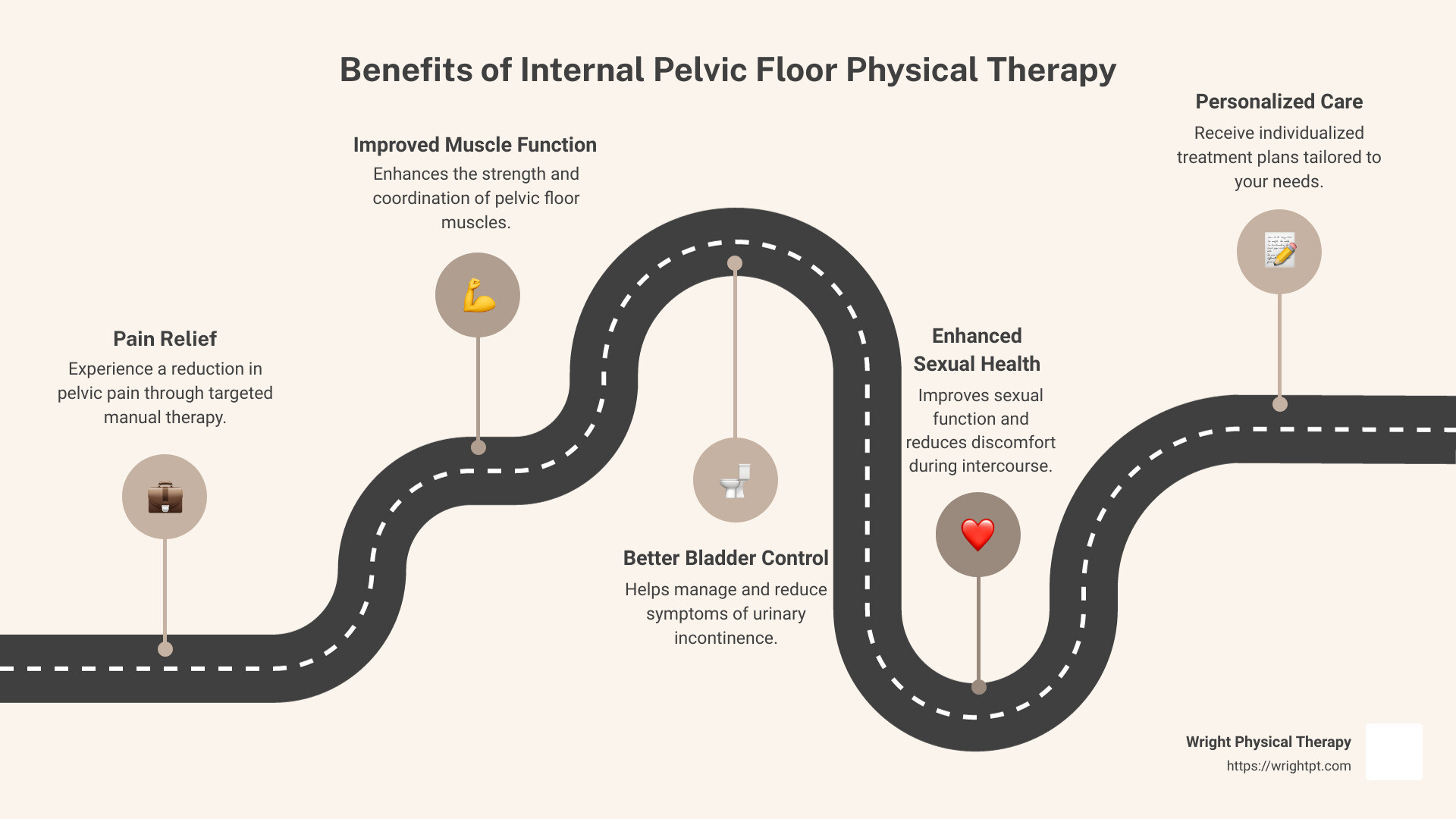
- Pain Relief: Manual techniques and exercises reduce muscle tension and trigger points, providing immediate and long-term pain relief.
- Improved Function: Strengthening and coordinating the pelvic floor muscles improves bladder and bowel control, as well as overall pelvic function.
- Enhanced Sexual Health: By addressing muscle tightness and improving blood flow, therapy can enhance sexual function and reduce pain during intercourse.
By targeting these specific areas, internal pelvic floor therapy offers a comprehensive approach to treating pelvic floor dysfunction. Next, we’ll look at the process of internal pelvic floor physical therapy, including what to expect during your first visit.
The Process of Internal Pelvic Floor Physical Therapy
What to Expect During Your First Visit
Your first visit to a pelvic floor physical therapist is all about understanding your symptoms and creating a plan tailored just for you. Here’s what you can expect:
1. Consultation: The therapist will start by discussing your medical history and symptoms. Questions may include:
- When did your symptoms start?
- What makes them better or worse?
- How do they affect your daily activities, such as urination, bowel movements, or sex?
2. Physical Exam: After the chat, the therapist will examine your posture, alignment, and movement patterns. This includes checking areas like your ribs, hips, lower back, pelvis, knees, and ankles.
3. Internal Exam: For a more detailed assessment, the therapist may conduct an internal exam. For women, this is usually intravaginal, and for men, it’s intrarectal. This helps identify any muscle imbalances or tissue restrictions.
4. Customized Program: Once the exam is complete, your therapist will discuss the findings with you and set goals for your treatment. Together, you’ll create a customized program that may include manual techniques, exercises, and other therapies.
Ongoing Treatment and Home Care
Each follow-up session will build on the last, adapting to any changes in your symptoms.
1. Manual Techniques: These sessions often include internal pelvic floor muscle work. Techniques like manual therapy, trigger point therapy, and myofascial release are commonly used.
2. Exercises: You’ll be given specific exercises to do at home. These are crucial for your recovery and should be done daily for about 15 minutes. Your therapist will likely recommend no more than three or four exercises to keep it manageable.
3. Frequency of Sessions: How often you see your therapist depends on your condition. For pain-related issues, you might start with weekly visits, then gradually reduce frequency as you improve. For muscle weakness or coordination problems, visits might be every couple of weeks.
4. Self-Care Tips: Your therapist will also teach you self-care tips to manage your symptoms between visits. This might include lifestyle changes, relaxation techniques, or dietary advice.
5. Monitoring Progress: Your therapist will regularly assess your progress to ensure the treatment is effective. Typically, you’ll start to see improvement within 6 to 8 sessions, but this can vary based on the severity of your condition.
By following this structured approach, you can expect a comprehensive and effective treatment plan tailored to your specific needs. Next, let’s address some frequently asked questions about internal pelvic floor therapy.
Frequently Asked Questions about Internal Pelvic Floor Therapy
Does Internal Pelvic Floor Therapy Hurt?
It’s natural to be concerned about discomfort, especially when it involves an intimate area. The good news is that internal pelvic floor therapy is generally not painful.
During the initial exam, your therapist will use a gloved finger to gently assess your pelvic floor muscles. Some patients might feel slight discomfort, especially if there are tight muscles or trigger points. However, the goal is to help these muscles relax and reduce pain over time.
Lauren Garges, P.T., W.C.S., a pelvic floor specialist, explains that many patients find these exams more comfortable than a typical gynecological exam because no speculums or swabs are used. Instead, therapists use light pressure and gentle techniques to avoid causing pain.
How Many Sessions Are Typically Needed?
The number of sessions varies depending on the individual’s condition and response to treatment. On average, patients might attend sessions once a week for 6 to 8 weeks. However, this can differ:
- Pain-related concerns: Typically require 8 to 12 visits.
- Urinary or bowel control issues: Usually need 6 to 8 visits.
Pikula, a pelvic floor therapist, notes that some patients with severe issues might need more sessions. Progress is monitored regularly, and the treatment plan is adjusted as needed.
Can Men Benefit from Pelvic Floor Therapy?
Absolutely! Men can experience pelvic floor issues just like women. Common conditions in men include:
- Urinary incontinence: Often due to weak pelvic floor muscles or after prostate surgery.
- Erectile dysfunction: Weak pelvic muscles can affect sexual performance.
- Pelvic pain: Trigger points or excessive muscle tension can cause discomfort.
By addressing these issues, men can improve their overall quality of life. As Paul Tulikangas, M.D., points out, strengthening pelvic floor muscles can lead to better control, coordination, and reduced symptoms.
Pelvic floor therapy isn’t just for women. Men dealing with these issues should consider seeking professional help to regain control and comfort.
By addressing these common questions, we hope to provide clarity and encourage you to take the next step toward better pelvic health. For more personalized advice or to book a consultation, contact Wright Physical Therapy today.
Conclusion
Internal pelvic floor physical therapy offers numerous long-term benefits that can significantly improve your quality of life. By addressing underlying muscle tension, weakness, and imbalances, this therapy can help alleviate chronic pain, enhance bladder and bowel control, and improve sexual function. Many patients report a dramatic reduction in symptoms and an overall sense of well-being after completing their treatment program.
One of the most compelling aspects of internal pelvic floor therapy is its ability to provide a non-invasive alternative to surgery or medication. As Wright Physical Therapy emphasizes, this specialized treatment aims to tackle the root cause of your discomfort, rather than just masking symptoms. This approach not only brings relief but also equips you with the knowledge and exercises to maintain muscle health long-term.
We understand that the idea of internal pelvic floor therapy can be daunting, especially if you’re unfamiliar with what it entails. However, our expert therapists at Wright Physical Therapy are here to guide you through every step of the process. Our goal is to create a comfortable, supportive environment where you can openly discuss your concerns and receive the best possible care.
Don’t let pelvic pain or dysfunction hold you back any longer. Take the first step towards a healthier, happier you by scheduling a consultation with Wright Physical Therapy. Our dedicated team is ready to help you regain control and improve your quality of life.
Contact Wright Physical Therapy today to book your appointment and start your journey towards better pelvic health.
For more information about pelvic floor therapy and other related topics, visit our Pelvic Floor Therapy page.